
Can wireless smoke detectors be interconnected?
Summary:
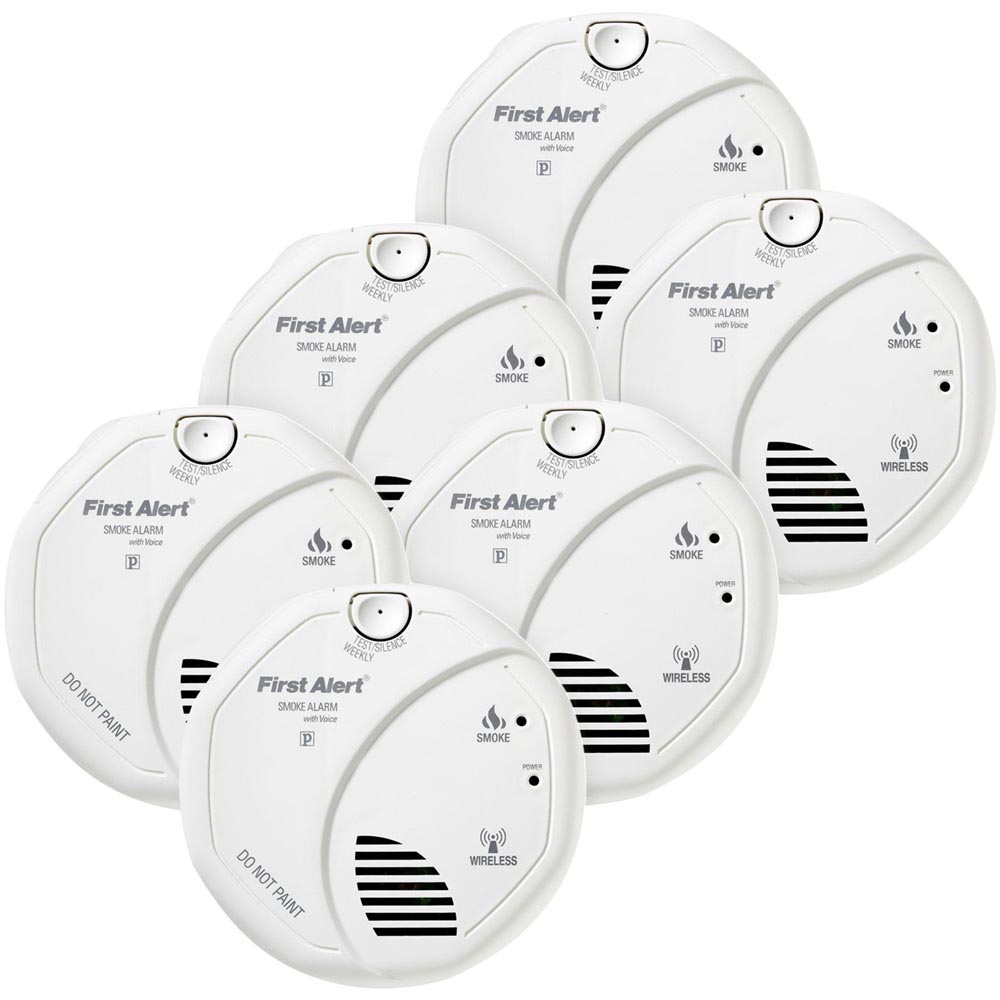
Wireless interconnected smoke detectors provide a convenient and effective way to enhance home safety. They eliminate the need for complex wiring and allow the alarms to communicate with each other through radio frequency signals. These interconnected smoke detectors can be interconnected in various ways, including using a three-way switch for hardwired detectors or using wireless technology for battery-operated alarms. They are also code compliant when they meet the NFPA standards for manufacturing, installation, and testing. Interconnected smoke alarms offer increased safety as they notify homeowners about emergencies sooner, even when they are not in the immediate vicinity of the fire. However, there are some disadvantages to consider, such as the reliance on battery power and the need to regularly replace batteries. Overall, wireless interconnected smoke detectors are a reliable and effective solution for improving home safety.
Questions:
1. How do you interconnect wireless smoke detectors?
An electrician can interconnect smoke detectors using a three-way switch, which contains black, red, and white wires. To interconnect the detectors, they simply connect the red wires from all the alarms together. It’s also possible to buy wireless interconnected smoke alarms.
2. What exactly is wireless alarm interconnection?
Wireless alarm interconnection enables smoke alarms to be connected to each other without the need for cabling between the alarms. Instead, a Radio Frequency (RF) signal is used to trigger all the alarms in the system.
3. Can a wireless smoke detector be interconnected with a hardwired one?
FireAngel has mixed system capability, allowing for the interlinking of battery and mains alarms. Just one mains powered Smart RF enabled alarm is required to adapt an established hardwired interconnected system to communicate to other FireAngel wireless products.
4. Can battery-operated smoke alarms be interconnected?
Battery power enables homeowners to install interconnected alarms without rewiring. A smart touch button quickly and temporarily silences nuisance alarms. Wireless alarms can be installed in detached workshops or sheds.
5. Do wireless interconnected smoke detectors meet code?
Like wired smoke detection systems, wireless smoke detectors are code compliant when they meet NFPA standards. The NFPA 72 sets out certain requirements for wireless smoke detector manufacturing, installation, and testing which must be met in order to be code compliant.
6. Are interconnected smoke alarms a good idea?
Interconnected smoke alarms are safer than standalone smoke alarms because they let you know about an emergency sooner. Even if you’re in the house, you may not be close to the area where the fire started. If you’re in the basement, you may not hear an alarm in the bedroom.
7. What are the disadvantages of wireless smoke detectors?
Disadvantages of a Wireless Fire Alarm System:
– The system is essentially useless if the batteries aren’t charged, since it won’t work properly.
– There is a burden on homeowners or business owners to always remember to keep the batteries fresh so the system operates properly when needed.
8. Do smoke detectors have to be wired in series?
Smoke detectors need to be wired together to create a complete system. With hard-wired detectors, a single smoke detector going off will set off the others, ensuring that everyone in your home is alerted to hazards. Hard-wired detectors are also able to run off both power and batteries, making them extra secure.
9. Can hard-wired and battery smoke alarms be linked?
Mains and battery-powered smoke and heat alarms can interlink in a number of ways: they can be hardwired, wireless (e.g., connected via Smart RF wireless technology), or part of a mixed system (also known as hybrid system).
10. How can I tell if my smoke alarms are interconnected?
You can check to see if your traditional smoke detectors are interconnected by removing the smoke detector and checking to see if it has 3 wires in the back. If the smoke detector has 3 wires and all three wires are connected in the electrical box, your smoke detector is most likely interconnected.
How do you interconnect wireless smoke detectors
How do you interconnect smoke detectors An electrician can interconnect smoke detectors using a three-way switch, which contains black, red and white wires. To interconnect the detectors, they simply connect the red wires from all the alarms together. It's also possible to buy wireless interconnected smoke alarms.
Cached
Can smoke detectors be connected wirelessly
WHAT EXACTLY IS WIRELESS ALARM INTERCONNECTION It enables smoke alarms to be connected to each other without the need for cabling between the alarms. Instead, a Radio Frequency (RF) signal is used to trigger all the alarms in the system.
Can a wireless smoke detector be interconnected with a hard wired one
Hardwired and wireless interconnected smoke alarms
FireAngel has mixed system capability, allowing for the interlinking of battery and mains alarms. Just one mains powered Smart RF enabled alarm is required to adapt an established hardwired interconnected system to communicate to other FireAngel wireless products.
Can battery operated smoke alarms be interconnected
Battery power enables homeowners to install interconnected alarms without rewiring. Smart touch button quickly and temporarily silences nuisance alarms. Wireless alarm can be installed in a detached workshop or shed.
Do wireless interconnected smoke detectors meet code
Like wired smoke detection systems, wireless smoke detectors are code compliant when they meet NFPA standards. The NFPA 72 sets out certain requirements for wireless smoke detector manufacturing, installation and testing which must be met in order to be code compliant.
Are interconnected smoke alarms a good idea
Interconnected smoke alarms are safer than standalone smoke alarms, because they let you know about an emergency sooner. Even if you're in the house, you may not be close to the area where the fire started. If you're in the basement, you may not hear an alarm in the bedroom.
What are the disadvantages of wireless smoke detector
Disadvantages of a Wireless Fire Alarm System
The system is essentially useless if the batteries aren't charged, since it won't work properly. There is a bit of a burden to homeowners or business owners to always remember to keep the batteries fresh so the system operates properly when you need it most.
Do smoke detectors have to be wired in series
Smoke detectors need to be wired together to create a complete system. With hard-wired detectors, a single smoke detector going off will set off the others — ensuring that everyone in your home is alerted to hazards. Hard-wired detectors are also able to run off both power and batteries, making them extra secure.
Can hard-wired and battery smoke alarms be linked
Mains and battery powered smoke and heat alarms can interlink in a number of ways: they can be hardwired, wireless (e.g. connected via Smart RF wireless technology) or part of a mixed system (also known as hybrid system).
How can I tell if my smoke alarms are interconnected
You can check to see if your traditional smoke detectors are interconnected by removing the smoke detector and checking to see if it has 3 wires in the back. If the smoke detector has 3 wires and all three wires are connected in the electrical box your smoke detector is most likely interconnected.
How many wireless smoke detectors can be interconnected
As with hardwired units, the NFPA states that up to 18 total units can be interconnected (RF or hardwired) with a maximum of 12 of those being smoke alarms and the balance carbon monoxide alarms.
Should smoke detectors be connected in series or parallel
Though power applied to the smoke detector(s) and the coil of the EOL relay are electrically in parallel, the physical wiring is in series.
Do smoke detectors need to be on a dedicated circuit
The electrical code does not require that hardwired smoke detectors need to be connected to a dedicated circuit, though there is nothing wrong with installing a new circuit for this purpose. More often, though, hardwired smoke detectors are installed by splicing into a general lighting circuit or outlet circuit.
Which is better wired or wireless smoke detectors
Winner: This one could go either way, but hardwired options provide much better safety protection, so they're a clear winner in our eyes. Battery-operated smoke alarms, on the other hand, require the least amount of technical skills.
How do I know if my smoke alarms are interconnected
You can get smoke alarms that are interconnected with a wire or that are wireless. If your smoke alarms are hard-wired look to see if there are three wires coming from the alarm, if they are all connected, then it is likely the alarms are interconnected.
Do all smoke detectors need to be hardwired
What Does the Hard-Wired Smoke Alarm Ordinance Require Since 1973, the State building code has required that all new homes be provided with a hard-wired smoke alarm. And since March 20, 1995, a hard-wired smoke detector with battery back-up is required outside the sleeping area of the home.
Do smoke alarms have to be on a separate circuit
The electrical code does not require that hardwired smoke detectors need to be connected to a dedicated circuit, though there is nothing wrong with installing a new circuit for this purpose. More often, though, hardwired smoke detectors are installed by splicing into a general lighting circuit or outlet circuit.
How many smoke detectors can be connected together
12
As with hardwired units, the NFPA states that up to 18 total units can be interconnected (RF or hardwired) with a maximum of 12 of those being smoke alarms and the balance carbon monoxide alarms.
Do wired smoke alarms need to be wired in
Smoke alarms are the most common safety alarm in our homes and should ideally be wired to the mains electrical supply with a battery backup in case of a power outage. In fact, new homes and some home improvement projects require hard-wired smoke alarms as part of Building Regulations' compliance.
What is the difference between wireless and hardwired smoke detectors
Wireless systems use signals that are transmitted through a radio bandwidth in order to alert you to smoke or a fire. If a fire does break out, there'll be no damage to wires. Conversely, in a wired system, the wires can be damaged before the alarm is triggered.
Do smoke detectors have to be hard wired
What Does the Hard-Wired Smoke Alarm Ordinance Require Since 1973, the State building code has required that all new homes be provided with a hard-wired smoke alarm. And since March 20, 1995, a hard-wired smoke detector with battery back-up is required outside the sleeping area of the home.
Are wired or wireless smoke detectors better
Hardwired smoke alarms are more dependable as they are connected on a power supply. Once the alarm sounds, they will not stop until turned off. In case of power interruptions, they have battery backups for continuous operation. Battery-powered smoke alarms depend solely on the batteries.
Are wired smoke alarms better than wireless
Wired systems are slightly more reliable than wireless alarm systems. This is as, unlike wireless systems, wired systems do not rely on battery and are connected to a steady power supply. However, wireless alarms are still a great option as battery life can last up to 5 years.
Why is hardwired better than wireless
Speed: Modern Ethernet wired networks are capable of 5 Gbps data transmission. With the addition of Gigabit Ethernet routers to the wired network, their speeds have consistently increased. On the other hand, wireless networks are prone to signal buffer, which is due to low data transfer speeds and data packet losses.
Do smoke alarms need to be hard wired
What type of smoke alarm is required The regulations do not stipulate the type of alarms (such as mains powered ('hard-wired') or battery powered) that should be installed.


0 Comments