
How do I run offline scan and fix?
Summary of the Article
How do I run offline scan?
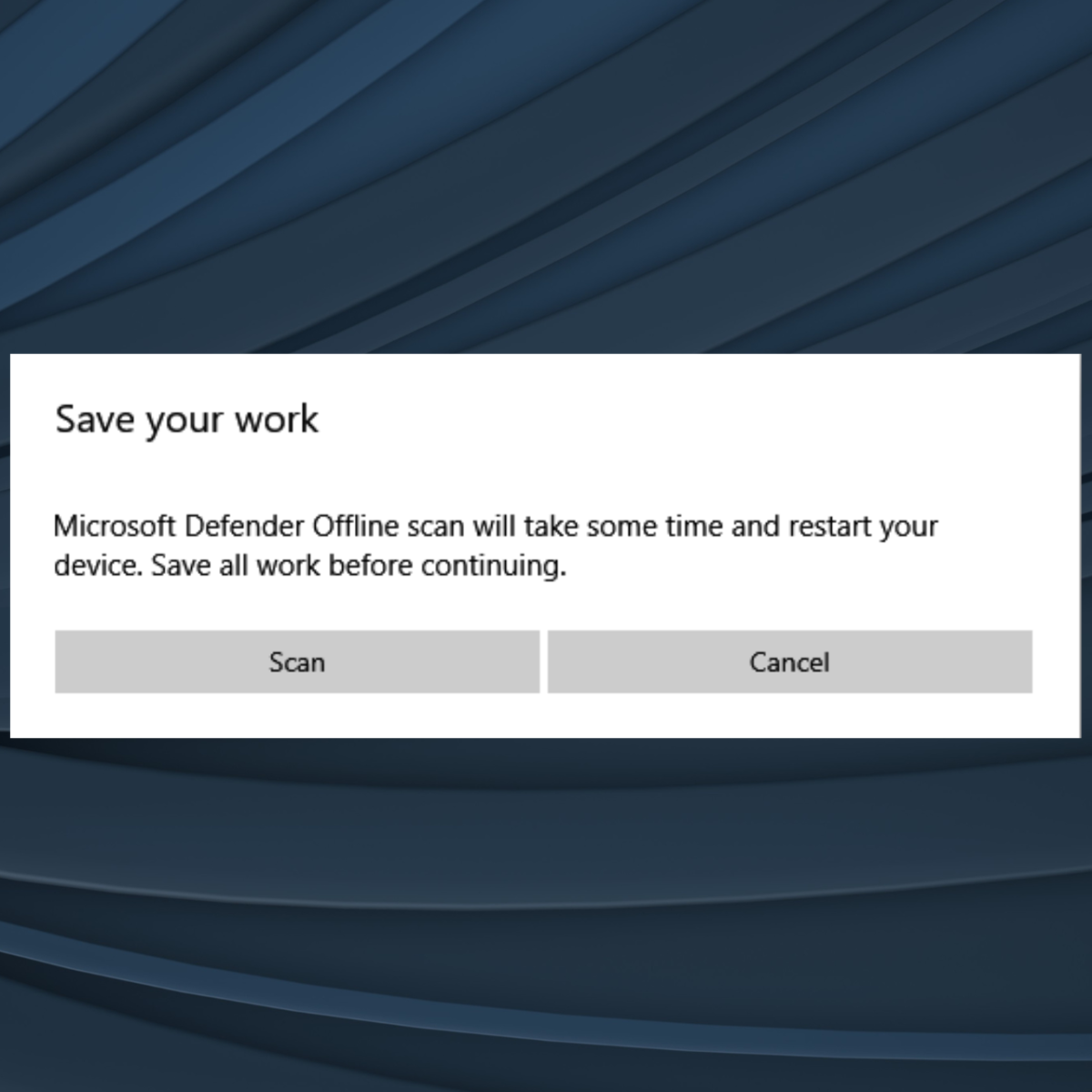
Use the Windows Defender Security app to run an offline scan. Select Microsoft Defender Offline scan and click Scan now. In Windows 10, version 1607, the offline scan could be run from under Windows Settings > Update & security > Windows Defender or from the Windows Defender client.
How do I run sfc in offline mode?
Type the following command to exit diskpart and press Enter: exit. Type the following command to run the System File Checker offline and press Enter: sfc /scannow /offbootdir=e:\ /offwindir=C:\Windows.
Does chkdsk need Internet?
You can also run an on-demand online scan with chkdsk /scan to identify and spot-fix file system corruption, although for major problems a full offline scan is still required.
How do I run a scan and repair on my computer?
Click Start. In the search bar, type CMD. Right-click CMD.exe and select Run as Administrator. On the User Account Control (UAC) prompt, click Yes. In the command prompt window, type SFC /scannow and press Enter. The System file checker utility checks the integrity of Windows system files and repairs them if required.
How does Windows Offline scan work?
Microsoft Defender Offline will load and perform a quick scan of your PC in the recovery environment. When the scan has finished (usually takes about 15 minutes), your PC will automatically restart. Note: You typically need administrator rights on the PC on which you plan to run Microsoft Defender Offline.
What is the difference between full scan and offline scan in Windows Defender?
Full Scan: Best run when the system is not planned to be in use, as this will scan as many running files and programs as possible. Custom Scan: Lets you select folders to scan. Windows Defender Offline Scan: This option lets you restart Windows and runs a scan before the system’s operating system has fully loaded.
Should I Run DISM or SFC first?
Run SFC first, and only if SFC finds a problem is it necessary to run DISM. Run SFC first, and — no matter what SFC reports — you might as well run DISM after that.
How do I Run SFC in repair mode?
Click on the “Repair your computer” option in the bottom-left corner of the screen. Select Troubleshoot > Advanced options > Command Prompt. In the Command Prompt window, type “sfc /scannow /offbootdir=<drive letter>:\ /offwindir=<drive letter>:\Windows” and press Enter.
What is the difference between CHKDSK online and offline?
In the chkdsk context, an online scan is performed while the volume is still mounted. An offline scan dismounts the volume to fix errors. Specify a volume for chkdsk to scan. Follow the volume letter with the : symbol (e.g., C: ).
How to repair corrupted hard disk using CMD
To repair errors without scanning the disk for bad sectors, at the command prompt, type chkdsk volume: /f, and then press <Enter>. To repair errors, bad sectors, and readable information, at the command prompt, type chkdsk volume: /r, and then press <Enter>.
Should I run DISM or SFC first?
Run SFC first, and only if SFC finds a problem is it necessary to run DISM. Run SFC first, and — no matter what SFC reports — you might as well run DISM after that.
How do I run offline scan
Use the Windows Defender Security app to run an offline scan
Select Microsoft Defender Offline scan and click Scan now. In Windows 10, version 1607, the offline scan could be run from under Windows Settings > Update & security > Windows Defender or from the Windows Defender client.
Cached
How do I run sfc in offline mode
Type the following command to exit diskpart and press Enter: exit.Type the following command to run the System File Checker offline and press Enter: sfc /scannow /offbootdir=e:\ /offwindir=C:\Windows.
Cached
Does chkdsk need Internet
You can also run an on-demand online scan with chkdsk /scan to identify and spot-fix file system corruption, although for major problems a full offline scan is still required.
CachedSimilar
How do I run a scan and repair on my computer
Click Start.In the search bar, type CMD .Right-click CMD.exe and select Run as Administrator.On the User Account Control (UAC) prompt, click Yes.In the command prompt window, type SFC /scannow and press Enter .System file checker utility checks the integrity of Windows system files and repairs them if required.
How does Windows Offline scan work
Microsoft Defender Offline will load and perform a quick scan of your PC in the recovery environment. When the scan has finished (usually takes about 15 minutes), your PC will automatically restart. Notes: You typically need administrator rights on the PC on which you plan to run Microsoft Defender Offline.
What is the difference between full scan and offline scan in Windows Defender
Full Scan: Best run when system is not planned to be in use, as this will scan as many running files and programs as possible. Custom Scan: Lets you select folders to scan. Windows Defender Offline Scan: This option lets you restart Windows and runs a scan before the systems operating system has fully loaded.
Should I Run DISM or SFC first
Run SFC first, and only if SFC finds a problem is it necessary to run DISM. Run SFC first, and — no matter what SFC reports — you might as well run DISM after that.
How do I Run SFC in repair mode
Click on the “Repair your computer” option in the bottom-left corner of the screen. Select Troubleshoot > Advanced options > Command Prompt. In the Command Prompt window, type “sfc /scannow /offbootdir=<drive letter>:\ /offwindir=<drive letter>:\Windows” and press Enter.
What is the difference between CHKDSK online and offline
In the chkdsk context, an online scan is performed while the volume is still mounted. An offline scan dismounts the volume to fix errors. Specify a volume for chkdsk to scan. Follow the volume letter with the : symbol (e.g., C: ).
How to repair corrupted hard disk using CMD
To repair errors without scanning the disk for bad sectors, at the command prompt, type chkdsk volume: /f, and then press <Enter>. To repair errors, bad sectors, and readable information, at the command prompt, type chkdsk volume: /r, and then press <Enter>.
Should I run DISM or SFC first
Run SFC first, and only if SFC finds a problem is it necessary to run DISM. Run SFC first, and — no matter what SFC reports — you might as well run DISM after that.
What is the command for scan and repair
The sfc /scannow command will scan all protected system files, and replace corrupted files with a cached copy that is located in a compressed folder at %WinDir%\System32\dllcache.
What is better a full scan or Microsoft Defender offline scan
Full Scan: Best run when system is not planned to be in use, as this will scan as many running files and programs as possible. Custom Scan: Lets you select folders to scan. Windows Defender Offline Scan: This option lets you restart Windows and runs a scan before the systems operating system has fully loaded.
Should I run Windows Defender offline scan
When should I use Microsoft Defender Offline Run Microsoft Defender Offline if: Windows Security (also called Windows Defender Security Center in previous versions of Windows) detects rootkits or other highly persistent malware on your PC and recommends you use Microsoft Defender Offline.
How good is Windows Defender offline scan
In the file detection tests, Microsoft Defender ranked poorly when tested in offline mode. It had a 60.3% detection rate compared to others on the list like Avast's 94.2%, or Kasperksy's 78%.
Does DISM fix corrupt files
In short, DISM is not a complete reinstallation of Windows; instead, it finds critical core files required to run and gather information, then upgrades or repairs any files that are corrupted or out-of-date.
How do I fix corrupt system files with DISM and SFC
Open Command Prompt or PowerShell as administrator, then run "sfc /scannow" to fix corrupted Windows System Files. If SFC fails to run properly or cannot repair the files, run "DISM /Online /Cleanup-Image /RestoreHealth" to fix any remaining issues.
How do I boot to system repair
Method 1: Startup repair toolStart the system to the installation media for the installed version of Windows.On the Install Windows screen, select Next > Repair your computer.On the Choose an option screen, select Troubleshoot.On the Advanced options screen, select Startup Repair.
Should you run SFC or DISM first
Run SFC first, and — no matter what SFC reports — you might as well run DISM after that.
Does CHKDSK fix corrupt files
Use CHKDSK regularly to scan your hard drive for corrupted files, help repair and clean up your PC, and maintain its health. CHKDSK can scan for bad sectors — ruined parts of your hard drive — even when your PC won't turn on. That helps you find and fix hard drive errors, and frees up disk space as well.
How do I fix a corrupted hard drive that won’t boot
FAQsRestart the computer.Open the BIOS.Select the Boot option from the drop-down menu.Change the order of the options such that the hard disc is the first option.Save these options.Restart the computer again.
How do I force a corrupted hard drive to format
Right-click Start and click Disk Management. Right-click the volume of your corrupted hard drive and select Format. Ensure Perform a quick format is selected and click OK. Click OK again to confirm the action.
How do I run command prompt in repair mode
It doesn't matter whether the installation media is for Windows 11 or Windows 10: either one works the same.Boot your PC using some Windows installation media (USB, DVD, etc.)Press Shift + F10 on the keyboard to open Command Prompt on boot.Choosing Repair your computer.The Troubleshoot option.
How to automatic repair using cmd
In the command prompt window, type “chkdsk /r c:” and hit Enter. This command will check your drive for errors using the CHKDSK utility and automatically repair them if possible. Type “sfc /scannow” and hit Enter. This will check the integrity of Windows system files using the System File Checker tool.
Why won t Microsoft Defender offline scan work
Update Windows 11/10
Sometimes Windows update can be a good solution to fix some system issues including Windows Defender offline scan not working. Step 1: Go to Windows 10 Settings, click Update > Security > Windows Update. Or in Windows Settings, click Windows Update. Step 2: Check for available updates.


0 Comments