
What should your DTI be for a mortgage?
What is an acceptable debt-to-income ratio for a mortgage?
Standards and guidelines vary, most lenders like to see a DTI below 35─36% but some mortgage lenders allow up to 43─45% DTI, with some FHA-insured loans allowing a 50% DTI.
Can you get a mortgage with 55% DTI?
There’s not a single set of requirements for conventional loans, so the DTI requirement will depend on your personal situation and the exact loan you’re applying for. However, you’ll generally need a DTI of 50% or less to qualify for a conventional loan.
Can you buy a house with 60% DTI?
Here are the common maximum DTI ratios for major loan programs: Conventional loans: 43% to 50% FHA loans: 45% to 50% VA loans: No max DTI specified, but borrowers with higher DTI could be subject to additional scrutiny.
Can you get a mortgage over 50% DTI?
Maximum DTI Ratios
For manually underwritten loans, Fannie Mae’s maximum total debt-to-income (DTI) ratio is 36% of the borrower’s stable monthly income. The maximum can be exceeded up to 45% if the borrower meets the credit score and reserve requirements reflected in the Eligibility Matrix.
What is too high of a debt-to-income ratio?
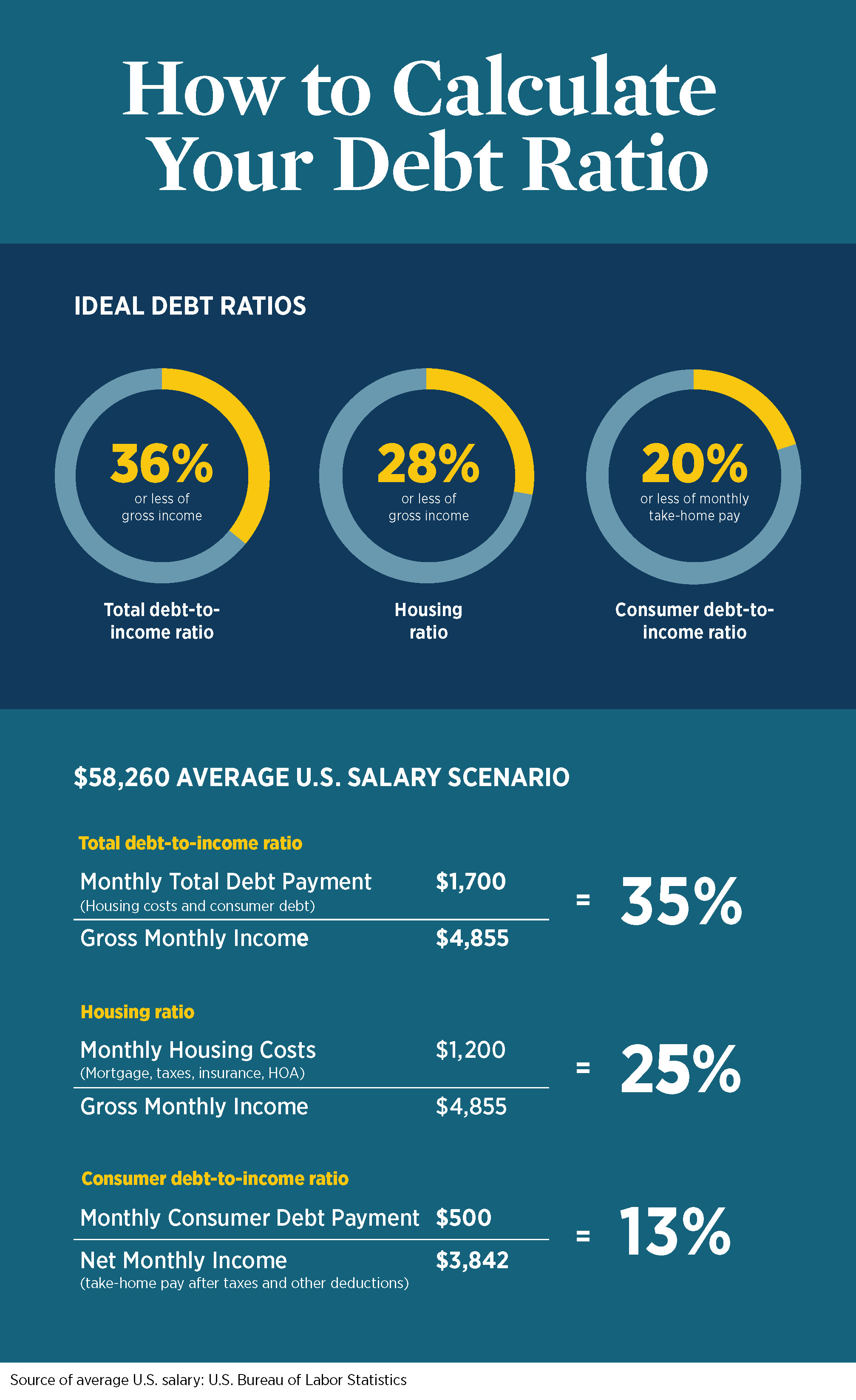
Generally speaking, a good debt-to-income ratio is anything less than or equal to 36%. Meanwhile, any ratio above 43% is considered too high. The biggest piece of your DTI ratio pie is bound to be your monthly mortgage payment.
How high is too high for debt-to-income ratio?
Debt-to-income ratio of 42% to 49%
DTIs between 42% and 49% suggest you’re nearing unmanageable levels of debt relative to your income. Lenders might not be convinced that you will be able to meet payments for another line of credit.
How can I improve my DTI ratio?
How do you lower your debt-to-income ratioIncrease the amount you pay monthly toward your debts.Ask creditors to reduce your interest rate, which would lead to savings that you could use to pay down debt.Avoid taking on more debt.Look for ways to increase your income.
Can you get a mortgage with a 47% DTI?
Homeowners generally need the same DTI ratio for a refinance or home equity loan as they would for a home purchase loan — between 36% to 43% for a conventional loan and no more than 50% for an FHA loan.
Can I get a mortgage with 70 DTI?
Some lenders may be willing to offer you a mortgage with a DTI over 50%. However, you are more likely to be approved for a loan if your DTI is below 43%, and many lenders will prefer that your DTI be under 36%.
What is too high for debt-to-income ratio?
Generally speaking, a good debt-to-income ratio is anything less than or equal to 36%. Meanwhile, any ratio above 43% is considered too high. The biggest piece of your DTI ratio pie is bound to be your monthly mortgage payment.
How can I lower my debt-to-income ratio quickly?
Paying down debt is the most straightforward way to reduce your DTI. The fewer debts you owe, the lower your debt-to-income ratio will be. However, keep in mind that your DTI will not immediately decrease when you begin lowering your overall debt.
What is an acceptable debt-to-income ratio for a mortgage
Standards and guidelines vary, most lenders like to see a DTI below 35─36% but some mortgage lenders allow up to 43─45% DTI, with some FHA-insured loans allowing a 50% DTI.
CachedSimilar
Can you get a mortgage with 55% DTI
There's not a single set of requirements for conventional loans, so the DTI requirement will depend on your personal situation and the exact loan you're applying for. However, you'll generally need a DTI of 50% or less to qualify for a conventional loan.
Cached
Can you buy a house with 60% DTI
Here are the common maximum DTI ratios for major loan programs: Conventional loans: 43% to 50% FHA loans: 45% to 50% VA loans: No max DTI specified, but borrowers with higher DTI could be subject to additional scrutiny.
Can you get a mortgage over 50% DTI
Maximum DTI Ratios
For manually underwritten loans, Fannie Mae's maximum total debt-to-income (DTI) ratio is 36% of the borrower's stable monthly income. The maximum can be exceeded up to 45% if the borrower meets the credit score and reserve requirements reflected in the Eligibility Matrix.
What is too high of a debt-to-income ratio
Generally speaking, a good debt-to-income ratio is anything less than or equal to 36%. Meanwhile, any ratio above 43% is considered too high. The biggest piece of your DTI ratio pie is bound to be your monthly mortgage payment.
How high is too high for debt-to-income ratio
Debt-to-income ratio of 42% to 49%
DTIs between 42% and 49% suggest you're nearing unmanageable levels of debt relative to your income. Lenders might not be convinced that you will be able to meet payments for another line of credit.
How can I improve my DTI ratio
How do you lower your debt-to-income ratioIncrease the amount you pay monthly toward your debts.Ask creditors to reduce your interest rate, which would lead to savings that you could use to pay down debt.Avoid taking on more debt.Look for ways to increase your income.
Can you get a mortgage with a 47% DTI
Homeowners generally need the same DTI ratio for a refinance or home equity loan as they would for a home purchase loan — between 36% to 43% for a conventional loan and no more than 50% for an FHA loan.
Can I get a mortgage with 70 DTI
Some lenders may be willing to offer you a mortgage with a DTI over 50%. However, you are more likely to be approved for a loan if your DTI is below 43%, and many lenders will prefer than your DTI be under 36%.
What is too high for debt-to-income ratio
Generally speaking, a good debt-to-income ratio is anything less than or equal to 36%. Meanwhile, any ratio above 43% is considered too high. The biggest piece of your DTI ratio pie is bound to be your monthly mortgage payment.
How can I lower my debt-to-income ratio quickly
Paying down debt is the most straightforward way to reduce your DTI. The fewer debts you owe, the lower your debt-to-income ratio will be. However, keep in mind that your DTI will not immediately decrease when you begin lowering your overall debt.
Is a 20% debt-to-income ratio bad
Generally, a DTI of 20% or less is considered low and at or below 43% is the rule of thumb for getting a qualified mortgage, according to the CFPB. Lenders for personal loans tend to be more lenient with DTI than mortgage lenders. In all cases, however, the lower your DTI, the better.
How do you lower DTI ratio
Paying down debt is the most straightforward way to reduce your DTI. The fewer debts you owe, the lower your debt-to-income ratio will be. However, keep in mind that your DTI will not immediately decrease when you begin lowering your overall debt.
How do I lower my debt-to-income ratio
How do you lower your debt-to-income ratioIncrease the amount you pay monthly toward your debts.Ask creditors to reduce your interest rate, which would lead to savings that you could use to pay down debt.Avoid taking on more debt.Look for ways to increase your income.
How do I lower my DTI ASAP
Paying down debt is the most straightforward way to reduce your DTI. The fewer debts you owe, the lower your debt-to-income ratio will be. However, keep in mind that your DTI will not immediately decrease when you begin lowering your overall debt.
Is it better to have lower DTI or bigger down payment
If it needs work, though, paying down debt will give you a better chance of increasing your credit score. Debt-to-income ratio: Your DTI is a crucial factor in the mortgage underwriting process, so if it's too high, a larger down payment may not be enough to save you.
Is 50% DTI too high
The lower the DTI the better. Most lenders see DTI ratios of 36% or less as ideal. It is very hard to get a loan with a DTI ratio exceeding 50%, though exceptions can be made. DTI limits do vary by lender and by type of loan.
What is the minimum DTI for FHA
43%
FHA lenders typically look for applicants with a debt-to-income ratio of 43% or lower.
What is a bad income to debt ratio
Debt-to-income ratio is your monthly debt obligations compared to your gross monthly income (before taxes), expressed as a percentage. A good debt-to-income ratio is less than or equal to 36%. Any debt-to-income ratio above 43% is considered to be too much debt.
How are credit cards factored into DTI
To calculate your DTI, divide your total recurring monthly debt (such as credit card payments, mortgage, and auto loan) by your gross monthly income (the total amount you make each month before taxes, withholdings, and expenses).
Is 40% debt-to-income ratio bad
35% or less is generally viewed as favorable, and your debt is manageable. You likely have money remaining after paying monthly bills. 36% to 49% means your DTI ratio is adequate, but you have room for improvement. Lenders might ask for other eligibility requirements.
Does credit score affect DTI
Your income is not included in your credit report, so your DTI never affects your credit report or credit score. However, many lenders calculate your DTI when deciding to offer you credit. That's because DTI is considered an indicator of whether you'll be able to repay a loan.
What matters more DTI or credit score
Highlights: Debt-to-credit and debt-to-income ratios can help lenders assess your creditworthiness. Your debt-to-credit ratio may impact your credit scores, while debt-to-income ratios do not. Lenders and creditors prefer to see a lower debt-to-credit ratio when you're applying for credit.
Is it better to put 20 down or pay PMI
Putting down 20% on a home purchase can reduce your monthly payment, eliminate private mortgage insurance and possibly give you a lower interest rate.
Can I get a mortgage with a 49% DTI
As a general guideline, 43% is the highest DTI ratio a borrower can have and still get qualified for a mortgage. Ideally, lenders prefer a debt-to-income ratio lower than 36%, with no more than 28% of that debt going towards servicing a mortgage or rent payment.


0 Comments