
What can BIOS malware do?
Summary of the Article
Can a BIOS be infected with malware?
Yes, malware can hide in BIOS by infecting the bootloader. The bootloader is a small program that loads the operating system into memory. If the bootloader is infected with malware, it can infect the rest of your system, including the BIOS.
What is a malware that infects the BIOS?
A BIOS-level rootkit attack, also known as a persistent BIOS attack, is an exploit in which the BIOS is flashed (updated) with malicious code. A BIOS rootkit is programming that enables remote administration.
Can a virus destroy your BIOS?
Short answer: Yes, but unlikely. Long answer: A) Destroying the BIOS/UEFI of a machine is not beneficial for the attacker, and is unusual to do.
How do you know if your BIOS is infected?
The most common sign of BIOS infection is boot up trouble. Your computer may start acting weird during start up or even not start at all. Specifically, the errors “No Boot Device Found” and “Invalid Boot Disk” are omens of BIOS malware.
Can hackers access your BIOS?
If the BIOS isn’t properly protected, it can get infected with malware or hacked. If this is the case, cybercriminals can hack directly into the laptop’s firmware, read out data or even manipulate it without being detected.
Can malware damage motherboard?
As a computer virus is only code, it cannot physically damage computer hardware. However, it can create scenarios where hardware or equipment controlled by computers is damaged. For example, a virus may instruct your computer to turn off the cooling fans, causing your computer to overheat and damage its hardware.
What virus deletes BIOS?
The Chernobyl virus is most notably recognized as the first virus known to have the power to damage computer hardware. The activated viral strain attempts to erase the hard drive and overwrite the system’s BIOS as well.
What is BIOS vulnerability?
BIOS update security vulnerabilities: Unintended or malicious modification of the system BIOS outside the authenticated BIOS update process, the Root of Trust for Update (RTU) and the system BIOS — excluding configuration data used by the system BIOS that is stored in non-volatile memory.
Can someone hack BIOS?
If the BIOS isn’t properly protected, it can get infected with malware or hacked. If this is the case, cybercriminals can hack directly into the laptop’s firmware, read out data or even manipulate it without being detected.
What are three signs of malware?
Follow this guide to learn more about the signs of malware and how you can diagnose and treat a malware infection. Slow performance. Unexpected freezing or crashing. Diminished storage space. Homepage randomly changes. Browser redirects. New browser toolbars. Annoying pop-ups. Unusual error messages.
What to do if BIOS pops up?
If your computer keeps booting to BIOS, the issue may be triggered by the incorrect boot order. Just go to check if there is an appropriate boot device available in BIOS. If you find it, set the disk as the primary boot option. If your hard drive listed under boot device cannot be found in BIOS, change this hard disk.
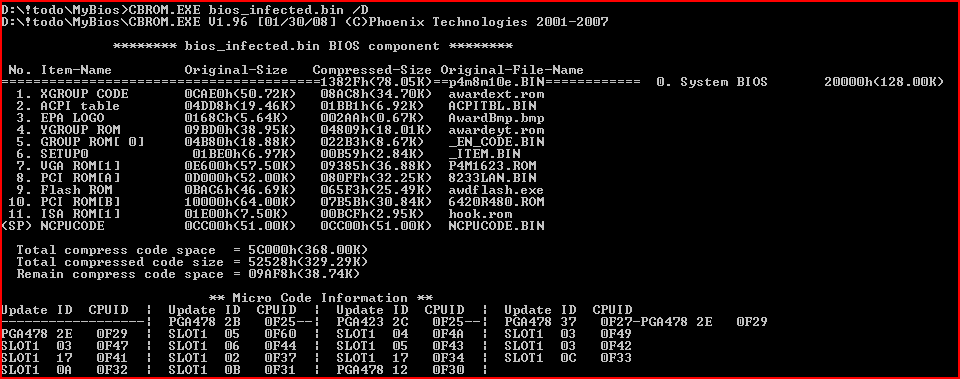
Can a BIOS be infected with malware
Yes, malware can hide in BIOS by infecting the bootloader. The bootloader is a small program that loads the operating system into memory. If the bootloader is infected with malware, it can infect the rest of your system, including the BIOS.
What is a malware that infects the BIOS
A BIOS-level rootkit attack, also known as a persistent BIOS attack, is an exploit in which the BIOS is flashed (updated) with malicious code. A BIOS rootkit is programming that enables remote administration.
Can a virus destroy your BIOS
Short answer: Yes, but unlikely. Long answer: A) Destroying the BIOS/UEFI of a machine is not beneficial for the attacker, and is unusual to do.
How do you know if your BIOS is infected
The most common sign of BIOS infection is boot up trouble. Your computer may start acting weird during start up or even not start at all. Specifically, the errors “No Boot Device Found” and “Invalid Boot Disk” are omens of BIOS malware.
Cached
Can hackers access your BIOS
If the BIOS isn't properly protected, it can get infected with malware or hacked. If this is the case, cybercriminals can hack directly into the laptop's firmware, read out data or even manipulate it without being detected.
Can malware damage motherboard
As a computer virus is only code, it cannot physically damage computer hardware. However, it can create scenarios where hardware or equipment controlled by computers is damaged. For example, a virus may instruct your computer to turn off the cooling fans, causing your computer to overheat and damage its hardware.
What virus deletes BIOS
The Chernobyl virus
The Chernobyl virus is most notably recognized as the first virus known to have the power to damage computer hardware. The activated viral strain attempts to erase the hard drive and overwrite the system's BIOS as well.
What is BIOS vulnerability
BIOS update security vulnerabilities
Unintended or malicious modification of the system BIOS outside the authenticated BIOS update process, the Root of Trust for Update (RTU) and the system BIOS — excluding configuration data used by the system BIOS that is stored in non-volatile memory.
Can someone hack BIOS
If the BIOS isn't properly protected, it can get infected with malware or hacked. If this is the case, cybercriminals can hack directly into the laptop's firmware, read out data or even manipulate it without being detected.
What are three signs of malware
Follow this guide to learn more about the signs of malware and how you can diagnose and treat a malware infection.Slow performance.Unexpected freezing or crashing.Diminished storage space.Homepage randomly changes.Browser redirects.New browser toolbars.Annoying pop-ups.Unusual error messages.
What to do if BIOS pops up
If your computer keeps booting to BIOS, the issue may be triggered by the incorrect boot order. Just go to check if there is an appropriate boot device available in BIOS. If you find it, set the disk as the primary boot option. If your hard drive listed under boot device cannot be found in BIOS, change this hard disk.
What can be accessed from the BIOS
The BIOS, sometimes referred to as UEFI firmware on newer computers, tells your PC what storage drives you have and which one to boot from, what processor you have, how much RAM, and much more.
What can be monitored from the BIOS
By monitoring the BIOS, you can manage hardware, install compatibility updates, change the boot sequence and make tweaks to allow your computer to boot more quickly. If your system isn't booting properly, monitoring the BIOS may give you an idea as to what is wrong.
Can a hacker fry your motherboard
A flaw in the control systems of server motherboards means they can be tricked into revealing sensitive data to a hacker or even destroying themselves.
Can a virus fry your CPU
As a computer virus is only code, it cannot physically damage computer hardware. However, it can create scenarios where hardware or equipment controlled by computers is damaged. For example, a virus may instruct your computer to turn off the cooling fans, causing your computer to overheat and damage its hardware.
Can BIOS be recovered
The CTRL + ESC key combination can be used to trigger BIOS recovery on computers where an external keyboard is the primary input. This applies to Dell desktops, all-in-one computers, and laptops.
Can BIOS be compromised
If the BIOS isn't properly protected, it can get infected with malware or hacked. If this is the case, cybercriminals can hack directly into the laptop's firmware, read out data or even manipulate it without being detected.
Can your BIOS be hacked
If the BIOS isn't properly protected, it can get infected with malware or hacked. If this is the case, cybercriminals can hack directly into the laptop's firmware, read out data or even manipulate it without being detected.
How do you know if your system is infected by malwares
How To Know if You Have Malwaresuddenly slows down, crashes, or displays repeated error messages.won't shut down or restart.won't let you remove software.serves up lots of pop-ups, inappropriate ads, or ads that interfere with page content.shows ads in places you typically wouldn't see them, like government websites.
How do you know if your computer has been infected with malware
Signs of an infection include your computer acting strangely, glitching and running abnormally slow. Installing and routinely updating antivirus software can prevent virus and malware infections, as can following cautious best practices.
Why did my PC enter BIOS
If your computer keeps booting to BIOS, the issue may be triggered by the incorrect boot order. Just go to check if there is an appropriate boot device available in BIOS. If you find it, set the disk as the primary boot option. If your hard drive listed under boot device cannot be found in BIOS, change this hard disk.
Can a BIOS cause blue screen of death
In some situations, an outdated BIOS could cause a Blue Screen of Death due to certain incompatibilities. Start your PC with essential hardware only. A useful troubleshooting step in many situations, including BSOD issues, is to start your computer with the minimum hardware necessary to run the operating system.
What information is stored in BIOS
The BIOS stores the date, the time, and your system configuration information in a battery-powered, non-volatile memory chip, called a CMOS (Complementary Metal Oxide Semiconductor) after its manufacturing process.
What are the three common case used to access the BIOS
In order to access BIOS on a Windows PC, you must press your BIOS key set by your manufacturer which could be F10, F2, F12, F1, or DEL.
Can someone hack my BIOS
If the BIOS isn't properly protected, it can get infected with malware or hacked. If this is the case, cybercriminals can hack directly into the laptop's firmware, read out data or even manipulate it without being detected.


0 Comments