
Can BIOS be infected?
Summary of the Article
If you notice that your computer’s clock is suddenly set to the wrong time or date, or that other settings have been changed, it is possible that your BIOS has been infected. If your computer’s behavior appears to be caused by a virus but your virus scans turn up clean, there’s a good chance you have a BIOS infection.
Short answer: Yes, but unlikely. Long answer: A) Destroying the BIOS/UEFI of a machine is not beneficial for the attacker, and is unusual to do.
If the BIOS isn’t properly protected, it can get infected with malware or hacked. If this is the case, cybercriminals can hack directly into the laptop’s firmware, read out data or even manipulate it without being detected.
BIOS memory is stored on the ROM chip on your motherboard. It is difficult to infect such memories, but the viruses like rootkits virus may infect the BIOS and your computer’s framework. In addition, the malicious code present in the BIOS can allow attackers to remotely control your computer.
The Chernobyl virus could sometimes cause the blue screen of death to appear on Windows computers. The second payload would rewrite the flash BIOS chip by replacing critical boot code with junk code.
The simplest method to check your BIOS version in all versions of Windows is to use the command prompt. Click on the Start menu, type cmd in the search box and select cmd.exe. When the command prompt window appears, type wmic bios get smbiosbiosversion.
First things first: BIOS viruses are rare.
The BIOS can be corrupted during normal operation, through environmental conditions (such as a power surge or outage), from a failed BIOS upgrade, or damage from a virus. If the BIOS is corrupted, the system automatically attempts to restore the BIOS from a hidden partition when the computer is restarted.
Prevent BIOS Changes. If your business has employees that like to tinker with their computer settings, including the BIOS, setting a BIOS password prevents unauthorized changes. Since changing the wrong BIOS setting can prevent a computer from booting or even corrupt the system, it’s important to keep employees out.
To access Windows 10 BIOS, go to Settings > Update & Security > Recovery. Go down to Advanced Startup and select Restart now. Then, select Troubleshoot > Advanced options > UEFI Firmware Settings > Restart to open the UEFI BIOS.
Open Command Prompt, type “wmic bios get smbiosbiosversion” in the window and hit Enter to check your BIOS version. Consult the documentation for your specific PC or motherboard on the manufacturer’s website for instructions on how to download and install the latest BIOS version.
Questions
- How do I know if my BIOS is infected?
- Can a virus destroy your BIOS?
- Can your BIOS be hacked?
- Can a virus infect a flash BIOS?
- What virus destroys BIOS?
- How do I check my BIOS health?
- How common are BIOS viruses?
- What can cause BIOS damage?
- Should I lock my BIOS?
- How do you diagnose a BIOS problem?
- How do I check for BIOS problems?
If you notice that your computer’s clock is suddenly set to the wrong time or date, or that other settings have been changed, it is possible that your BIOS has been infected. If your computer’s behavior appears to be caused by a virus but your virus scans turn up clean, there’s a good chance you have a BIOS infection.
Short answer: Yes, but unlikely. Long answer: A) Destroying the BIOS/UEFI of a machine is not beneficial for the attacker, and is unusual to do.
If the BIOS isn’t properly protected, it can get infected with malware or hacked. If this is the case, cybercriminals can hack directly into the laptop’s firmware, read out data or even manipulate it without being detected.
BIOS memory is stored on the ROM chip on your motherboard. It is difficult to infect such memories, but the viruses like rootkits virus may infect the BIOS and your computer’s framework. In addition, the malicious code present in the BIOS can allow attackers to remotely control your computer.
The Chernobyl virus could sometimes cause the blue screen of death to appear on Windows computers. The second payload would rewrite the flash BIOS chip by replacing critical boot code with junk code.
The simplest method to check your BIOS version in all versions of Windows is to use the command prompt. Click on the Start menu, type cmd in the search box and select cmd.exe. When the command prompt window appears, type wmic bios get smbiosbiosversion.
First things first: BIOS viruses are rare.
The BIOS can be corrupted during normal operation, through environmental conditions (such as a power surge or outage), from a failed BIOS upgrade, or damage from a virus. If the BIOS is corrupted, the system automatically attempts to restore the BIOS from a hidden partition when the computer is restarted.
Prevent BIOS Changes. If your business has employees that like to tinker with their computer settings, including the BIOS, setting a BIOS password prevents unauthorized changes. Since changing the wrong BIOS setting can prevent a computer from booting or even corrupt the system, it’s important to keep employees out.
To access Windows 10 BIOS, go to Settings > Update & Security > Recovery. Go down to Advanced Startup and select Restart now. Then, select Troubleshoot > Advanced options > UEFI Firmware Settings > Restart to open the UEFI BIOS.
Open Command Prompt, type “wmic bios get smbiosbiosversion” in the window and hit Enter to check your BIOS version. Consult the documentation for your specific PC or motherboard on the manufacturer’s website for instructions on how to download and install the latest BIOS version.
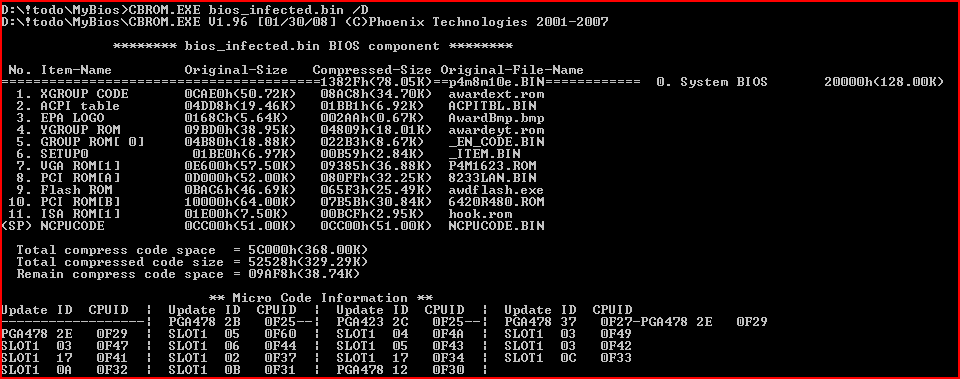
How do I know if my BIOS is infected
If you notice that your computer's clock is suddenly set to the wrong time or date, or that other settings have been changed, it is possible that your BIOS has been infected. If your computer's behavior appears to be caused by a virus but your virus scans turn up clean, there's a good chance you have a BIOS infection.
Can a virus destroy your BIOS
Short answer: Yes, but unlikely. Long answer: A) Destroying the BIOS/UEFI of a machine is not beneficial for the attacker, and is unusual to do.
Can your BIOS be hacked
If the BIOS isn't properly protected, it can get infected with malware or hacked. If this is the case, cybercriminals can hack directly into the laptop's firmware, read out data or even manipulate it without being detected.
Cached
Can a virus infect a flash BIOS
BIOS memory is stored on the ROM chip on your motherboard. It is difficult to infect such memories, but the viruses like rootkits virus may infect the BIOS and your computer's framework. In addition, the malicious code present in the BIOS can allow attackers to remotely control your computer.
Cached
What virus destroys BIOS
The Chernobyl virus could sometimes cause the blue screen of death to appear on Windows computers. The second payload would rewrite the flash BIOS chip by replacing critical boot code with junk code.
How do I check my BIOS health
The simplest method to check your BIOS version in all versions of Windows is to use the command prompt.Click on the Start menu, type cmd in the search box and select cmd.exe.When the command prompt window appears, type wmic bios get smbiosbiosversion.
How common are BIOS viruses
First things first: BIOS viruses are rare.
What can cause BIOS damage
The BIOS can be corrupted during normal operation, through environmental conditions (such as a power surge or outage), from a failed BIOS upgrade, or damage from a virus. If the BIOS is corrupted, the system automatically attempts to restore the BIOS from a hidden partition when the computer is restarted.
Should I lock my BIOS
Prevent BIOS Changes
If your business has employees that like to tinker with their computer settings, including the BIOS, setting a BIOS password prevents unauthorized changes. Since changing the wrong BIOS setting can prevent a computer from booting or even corrupt the system, it's important to keep employees out.
How do you diagnose a BIOS problem
To access Windows 10 BIOS, go to Settings > Update & Security > Recovery. Go down to Advanced Startup and select Restart now. Then, select Troubleshoot > Advanced options > UEFI Firmware Settings > Restart to open the UEFI BIOS.
How do I check for BIOS problems
Open Command Prompt, type “wmic bios get smbiosbiosversion” in the window and hit Enter to check your BIOS version. Consult the documentation for your specific PC or motherboard on the manufacturer's website for instructions on how to download and install the latest BIOS version.
Can a BIOS update be malware
BIOS updates hosted by third-party sites may be infected, and the BIOS update tools themselves may be malicious. Manufacturers usually provide updates over unauthenticated HTTP and FTP connections, leaving users vulnerable to man-in-the-middle attacks.
How much does it cost to fix BIOS
The cost of replacing a BIOS chip in a laptop can vary depending on the specific laptop model, the type of BIOS chip, and the labor costs of the technician performing the replacement. In general, the cost can range from $50 to $200 or more.
What is the risk of BIOS
Because a BIOS is critical to making your PC run, updating it carries a bit more risk than other software updates. If a BIOS update goes wrong, it could stop your motherboard from working correctly and potentially stop your computer from starting as expected.
What can damage BIOS
If the BIOS on your computer becomes corrupted, the computer fails to boot to Windows. The BIOS can be corrupted during normal operation, through environmental conditions (such as a power surge or outage), from a failed BIOS upgrade, or damage from a virus.
What is the common problem of BIOS
Sometimes, a BIOS update may cause compatibility issues with some of your hardware or software components, such as memory, graphics card, operating system, or drivers. This may result in performance degradation, errors, or crashes.
What can cause issues with your BIOS
What Can Cause BIOS CorruptionBoot failure.Hard disk error.Invalid system disk.NT boot loader missing.Missing operating system.
How do I fix a corrupted BIOS
You can do this one of three ways:Boot into the BIOS and reset it to the factory settings. If you are able to boot into the BIOS, go ahead and do so.Remove the CMOS battery from the motherboard. Unplug your computer and open your computer's case to access the motherboard.Reset the jumper.
How risky are BIOS updates
Because a BIOS is critical to making your PC run, updating it carries a bit more risk than other software updates. If a BIOS update goes wrong, it could stop your motherboard from working correctly and potentially stop your computer from starting as expected.
How safe are BIOS updates
Installing (or "flashing") a new BIOS is more dangerous than updating a simple Windows program, and if something goes wrong during the process, you could end up bricking your computer.
How risky is BIOS flashing
Installing (or "flashing") a new BIOS is more dangerous than updating a simple Windows program, and if something goes wrong during the process, you could end up bricking your computer.
What can be monitored from the BIOS
By monitoring the BIOS, you can manage hardware, install compatibility updates, change the boot sequence and make tweaks to allow your computer to boot more quickly. If your system isn't booting properly, monitoring the BIOS may give you an idea as to what is wrong.
What does a corrupt BIOS look like
The most common symptoms of a corrupted BIOS in a laptop or any other computer are: The laptop stopped working after the BIOS was updated. The laptop just died. No lights and no signs of life.
Can corrupt BIOS be fixed
A corrupt BIOS is one of the possible causes of a computer unable to complete POST or boot into the operating system. If the Dell computer or tablet supports BIOS recovery 2 or 3, you can recover the corrupt BIOS by using the recovery method that is detailed below for your Dell computer or tablet.
What causes corrupt BIOS
The BIOS can be corrupted during normal operation, through environmental conditions (such as a power surge or outage), from a failed BIOS upgrade, or damage from a virus. If the BIOS is corrupted, the system automatically attempts to restore the BIOS from a hidden partition when the computer is restarted.


0 Comments