
How do banks figure your debt to income ratio?
Summary of the article: Understanding Debt-to-Income Ratio
Can you get a mortgage with 55% DTI?
There’s not a single set of requirements for conventional loans, so the DTI requirement will depend on your personal situation and the exact loan you’re applying for. However, you’ll generally need a DTI of 50% or less to qualify for a conventional loan.
What is considered a good debt-to-income ratio?
35% or less: Looking Good – Relative to your income, your debt is at a manageable level. You most likely have money left over for saving or spending after you’ve paid your bills. Lenders generally view a lower DTI as favorable.
How do you get around debt-to-income ratio?
How do you lower your debt-to-income ratio? Increase the amount you pay monthly toward your debts. Ask creditors to reduce your interest rate, which would lead to savings that you could use to pay down debt. Avoid taking on more debt. Look for ways to increase your income.
How high can my debt-to-income ratio be for a mortgage?
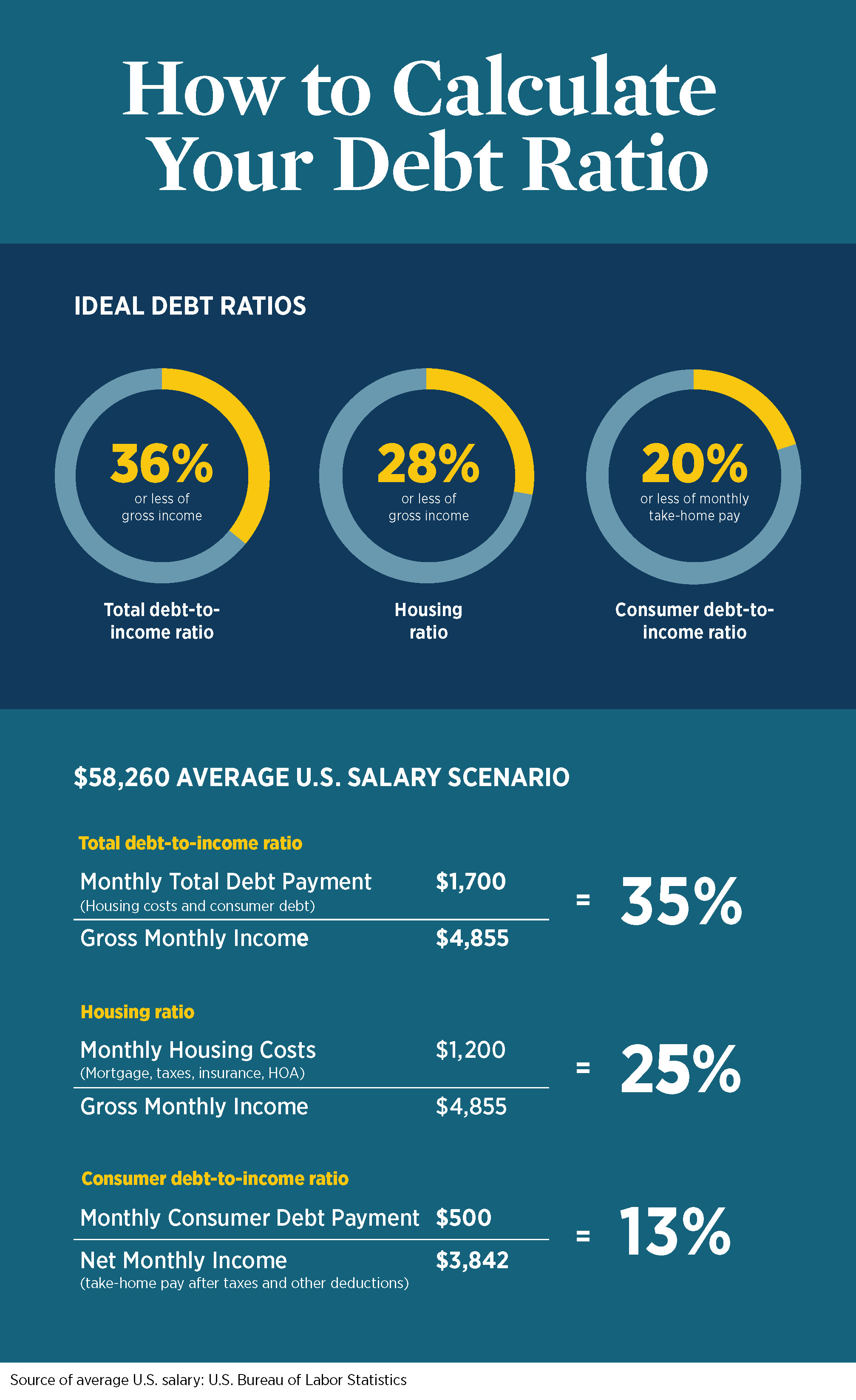
Generally speaking, most mortgage programs will require a DTI ratio of 43% or less. This means a maximum of 43% of your gross monthly income should be going toward your overall monthly debts, including the new mortgage payment. Of that 43%, 28% or less should be dedicated to your new mortgage payment.
What debt can be excluded from DTI?
Lenders generally exclude certain debts when calculating a mortgage’s debt-to-income (DTI). These debts may include: Debts that you’ll pay off within ten months of the mortgage closing date. Debts not reported on credit reports, such as utility bills and medical bills.
What is too high of a debt-to-income ratio?
Generally speaking, a good debt-to-income ratio is anything less than or equal to 36%. Meanwhile, any ratio above 43% is considered too high. The biggest piece of your DTI ratio pie is bound to be your monthly mortgage payment.
What is the average American debt-to-income ratio?
Americans spend roughly 9.58 percent of their disposable income on debt repayment, according to the Federal Bank of St. Louis. American households in total hold $11.67 trillion in debt, according to the Federal Reserve Bank of New York.
What is a bad debt-to-income ratio?
Generally, an acceptable debt-to-income ratio should sit at or below 36%. Some lenders, like mortgage lenders, generally require a debt ratio of 36% or less. In the example above, the debt ratio of 38% is a bit too high.
What is the average debt-to-income ratio in the US?
Americans spend roughly 9.58 percent of their disposable income on debt repayment, according to the Federal Bank of St. Louis. American households in total hold $11.67 trillion in debt, according to the Federal Reserve Bank of New York.
How do I know if my debt-to-income ratio is too high?
Debt-to-income ratio is your monthly debt obligations compared to your gross monthly income (before taxes), expressed as a percentage. A good debt-to-income ratio is less than or equal to 36%. Any debt-to-income ratio above 43% is considered to be too much debt.
What debt-to-income ratio is house poor?
The 28% Rule Of Thumb: The 28% rule is a general guideline that says you should try to spend no more than 28% of your monthly
Can you get a mortgage with 55% DTI
There's not a single set of requirements for conventional loans, so the DTI requirement will depend on your personal situation and the exact loan you're applying for. However, you'll generally need a DTI of 50% or less to qualify for a conventional loan.
Cached
What is considered a good debt-to-income ratio
35% or less: Looking Good – Relative to your income, your debt is at a manageable level. You most likely have money left over for saving or spending after you've paid your bills. Lenders generally view a lower DTI as favorable.
How do you get around debt-to-income ratio
How do you lower your debt-to-income ratioIncrease the amount you pay monthly toward your debts.Ask creditors to reduce your interest rate, which would lead to savings that you could use to pay down debt.Avoid taking on more debt.Look for ways to increase your income.
CachedSimilar
How high can my debt-to-income ratio be for a mortgage
Generally speaking, most mortgage programs will require: A DTI ratio of 43% or less. This means a maximum of 43% of your gross monthly income should be going toward your overall monthly debts, including the new mortgage payment. Of that 43%, 28% or less should be dedicated to your new mortgage payment.
What debt can be excluded from DTI
Lenders generally exclude certain debts when calculating a mortgage's debt-to-income (DTI). These debts may include: Debts that you'll pay off within ten months of the mortgage closing date. Debts not reported on credit reports, such as utility bills and medical bills.
What is too high of a debt-to-income ratio
Generally speaking, a good debt-to-income ratio is anything less than or equal to 36%. Meanwhile, any ratio above 43% is considered too high. The biggest piece of your DTI ratio pie is bound to be your monthly mortgage payment.
What is the average American debt-to-income ratio
Americans spend roughly 9.58 percent of their disposable income on debt repayment, according to the Federal Bank of St. Louis. American households in total hold $11.67 trillion in debt, according to the Federal Reserve Bank of New York.
What is a bad debt-to-income ratio
Generally, an acceptable debt-to-income ratio should sit at or below 36%. Some lenders, like mortgage lenders, generally require a debt ratio of 36% or less. In the example above, the debt ratio of 38% is a bit too high.
What is the average debt-to-income ratio in the US
Americans spend roughly 9.58 percent of their disposable income on debt repayment, according to the Federal Bank of St. Louis. American households in total hold $11.67 trillion in debt, according to the Federal Reserve Bank of New York.
How do I know if my debt-to-income ratio is too high
Debt-to-income ratio is your monthly debt obligations compared to your gross monthly income (before taxes), expressed as a percentage. A good debt-to-income ratio is less than or equal to 36%. Any debt-to-income ratio above 43% is considered to be too much debt.
What debt-to-income ratio is house poor
The 28% Rule Of Thumb
The 28% rule is a general guideline that says you should try to spend no more than 28% of your monthly gross income on housing expenses.
Do credit cards count towards DTI
A DTI ratio is usually expressed as a percentage. This ratio includes all of your total recurring monthly debt — credit card balances, rent or mortgage payments, vehicle loans and more.
Does car payment count as debt
The auto loan itself would be considered the "debt." The payments toward it would be considered "debt payments." With regard to your credit report, if you are applying for another loan somewhere and they looked at your debt-to-income ratio, the monthly auto loan payments would be included on the debt side.
What is the highest debt-to-income ratio to qualify for a mortgage
As a general guideline, 43% is the highest DTI ratio a borrower can have and still get qualified for a mortgage. Ideally, lenders prefer a debt-to-income ratio lower than 36%, with no more than 28% of that debt going towards servicing a mortgage or rent payment. 2 The maximum DTI ratio varies from lender to lender.
Is DTI or credit score more important
Highlights: Debt-to-credit and debt-to-income ratios can help lenders assess your creditworthiness. Your debt-to-credit ratio may impact your credit scores, while debt-to-income ratios do not. Lenders and creditors prefer to see a lower debt-to-credit ratio when you're applying for credit.
What is a bad income to debt ratio
Debt-to-income ratio is your monthly debt obligations compared to your gross monthly income (before taxes), expressed as a percentage. A good debt-to-income ratio is less than or equal to 36%. Any debt-to-income ratio above 43% is considered to be too much debt.
What is the average debt of an average American
Terms may apply to offers listed on this page. American households carry a total of $17 trillion in debt as of the first quarter of 2023, and the average household debt is $101,915 as of the end of 2022. How is that debt split between mortgages, auto loans, credit cards, and other types of loans
Is $20,000 a lot of debt
“That's because the best balance transfer and personal loan terms are reserved for people with strong credit scores. $20,000 is a lot of credit card debt and it sounds like you're having trouble making progress,” says Rossman.
What bills are not included in DTI
The following payments should not be included: Monthly utilities, like water, garbage, electricity or gas bills. Car Insurance expenses. Cable bills.
What is the max debt-to-income ratio for a auto loan
Most lenders cap DTI at 46%. With a good credit report, a new car loan is still possible. Higher DTI limits your ability to get any loans.
Can I get a loan if I have a high debt-to-income ratio
Two popular types of home loans that accept high DTIs are FHA and VA loans. FHA loans may take a DTI up to 50%. Also, you don't need to have an excellent credit score to qualify for an FHA loan. VA loans are recognized as the most lenient.
How to get a loan when debt-to-income ratio is high
How to get a loan with a high debt-to-income ratioTry a more forgiving program. Different programs come with varying DTI limits.Restructure your debts. Sometimes, you can reduce your ratios by refinancing or restructuring debt.Pay down the right accounts.Cash-out refinancing.Get a lower mortgage rate.
Do credit cards count against DTI
A DTI ratio is usually expressed as a percentage. This ratio includes all of your total recurring monthly debt — credit card balances, rent or mortgage payments, vehicle loans and more.
Can you get a mortgage with 70% DTI
Some lenders may be willing to offer you a mortgage with a DTI over 50%. However, you are more likely to be approved for a loan if your DTI is below 43%, and many lenders will prefer than your DTI be under 36%.
How much debt is the average American in
Average household debt by debt type
| Debt Type | 2021 Average Consumer Debt Balance |
|---|---|
| Auto loan debt and lease | $20,987 |
| Average credit card debt | $5,221 |
| Personal loans | $17,064 |
| Total average balance | $96,371 |


0 Comments