
Where is quarantined files in AVG?
computer’s files and directories for any viruses or malware that may be hidden. This scan may take some time, as it thoroughly examines all of your system’s files to ensure nothing harmful is lurking.
2 – After the scan is complete, the antivirus software will provide a detailed report of any threats that were detected. This report will typically include the name of the virus or malware, as well as the location of the infected file.
3 – If any viruses or malware are found, you will be given the option to quarantine or delete the infected files. Quarantine is a method of isolating the infected files from the rest of your system, so they can no longer harm your computer. Deleting the files, on the other hand, completely removes them from your computer.
4 – Quarantined files are typically stored in a secure location within your antivirus software. This ensures that they cannot accidentally be accessed or executed by your operating system or other software applications. While in quarantine, the files are effectively neutralized and cannot cause any further harm to your computer.
5 – It is important to periodically review and manage your quarantined files. Some antivirus software will automatically delete quarantined files after a certain period of time, while others may require manual intervention. Cleaning your quarantine regularly ensures that any potential threats are properly dealt with and your system remains protected.
6 – In some cases, you may need to restore a file from quarantine. This may be necessary if a file was mistakenly flagged as a threat and quarantined, but is actually safe and necessary for your system or applications to function properly. Most antivirus software will allow you to easily restore quarantined files with just a few clicks.
7 – While quarantine is a useful tool for dealing with potential threats, it is not foolproof. Some advanced malware may be able to evade detection and find ways to escape the quarantine environment. Therefore, it is still important to practice safe browsing habits, regularly update your antivirus software, and exercise caution when downloading or opening files from unknown sources.
8 – Quarantining files is just one aspect of a comprehensive antivirus strategy. It is also important to regularly update your antivirus software and ensure that you have the latest virus definitions, as new threats are constantly emerging. Additionally, practicing safe browsing habits and being cautious of suspicious emails or downloads can help prevent infections in the first place.
9 – If you are unsure about a quarantined file or need assistance with managing your antivirus software, it is always a good idea to contact the customer support for your specific antivirus software. They can provide guidance and help answer any questions or concerns you may have.
10 – In conclusion, quarantine is an important feature of antivirus software that helps protect your computer from potential threats. By isolating infected files, quarantine prevents them from causing further harm to your system. Regularly reviewing and managing quarantined files, as well as practicing safe browsing habits, can help ensure your computer remains secure.
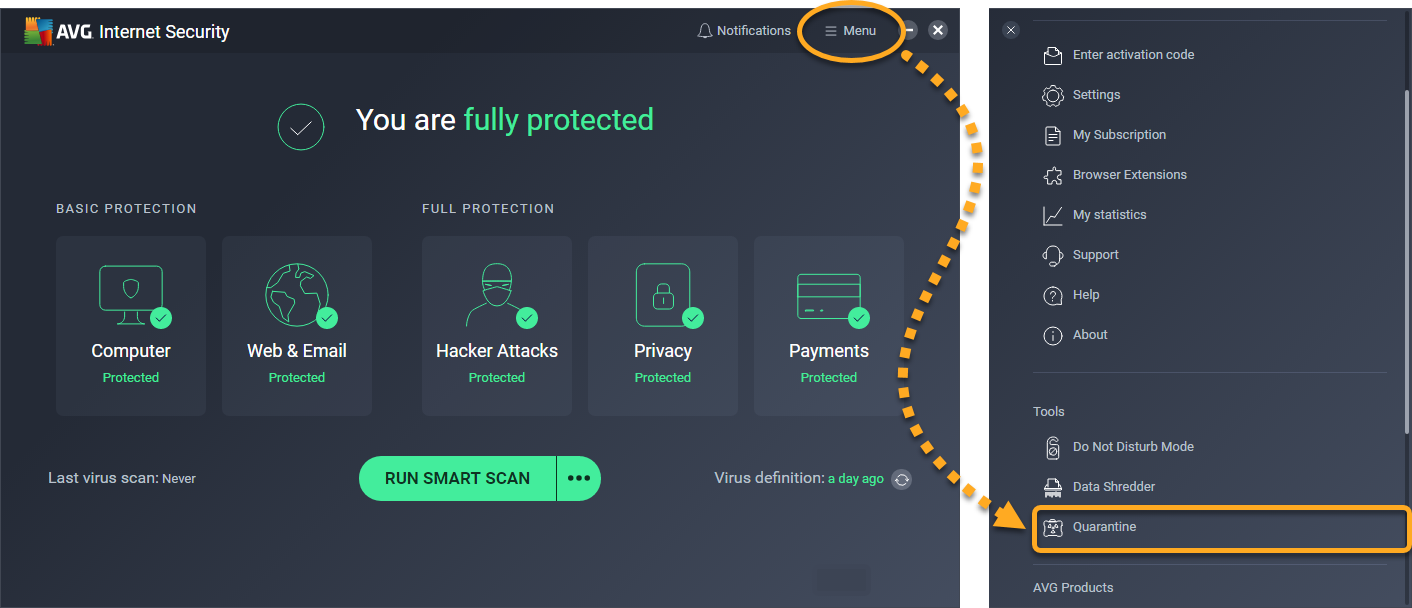
How do I remove quarantined files from AVG
So once you have the avg antivirus interface. Open go ahead and select the menu icon near the top right corner of the interface. And then you want to scroll down underneath. Tools and select the
How do I find and delete quarantined files
If you are certain a quarantined file is not a threat, you can restore it.Open Windows Security.Select Virus & threat protection and then click Protection history.In the list of all recent items, filter on Quarantined Items.Select an item you want to keep, and take an action, such as restore.
What are quarantined files
Files tagged for quarantine are encrypted and moved to a protected folder, preventing further execution and potential harm to the user's system. Each product has a Quarantine Manager where users can permanently delete or restore files from quarantine.
What is the virus vault in AVG
The main purpose of the Virus Vault is to keep any deleted file for a certain period of time, so that you can make sure you do not need the file any more. If you find out that the missing file is causing problems, you can send it for analysis, try to heal it, and restore it to the original location.
How do I remove all traces of AVG
Right-click the Windows Start icon, and select Apps and Features from the menu that appears. Ensure that Apps is selected in the left panel, then click ⋮ (three dots) next to AVG AntiVirus FREE and click Uninstall twice. If prompted for permission by the User Account Control dialog, click Yes.
Can I delete quarantine folder
Open File Explorer, then on the View menu at the top, temporarily turn on 'Hidden Items'. Go to this folder and delete the contents of the Service folder. That's it, that will remove the quarantined items and their entry from the list in Defender.
What happens if you delete quarantined files
In the Quarantined items tab, check the boxes of the items you want to restore or delete. Click the Restore or Delete button. Deleting the items permanently removes them from your device.
Should I delete quarantined files
Quarantined files cannot harm your computer but they do still take up valuable space on your hard drive. Therefore, if you have infected files in quarantine, you should clean them as soon as possible. Remember, it's as simple as scanning, quarantining infected files, and cleaning or deleting them.
Should you delete quarantined files
Quarantined files cannot harm your computer but they do still take up valuable space on your hard drive. Therefore, if you have infected files in quarantine, you should clean them as soon as possible. Remember, it's as simple as scanning, quarantining infected files, and cleaning or deleting them.
What is quarantine in AVG
Quarantine is a safe place in AVG AntiVirus for storing potentially harmful files and completely isolating them from the rest of your operating system. Files in Quarantine cannot be accessed or run by any outside processes, software applications, or viruses.
How do I find hidden viruses
Run a virus scan
After installing your antivirus software, you need to check your computer for any malware by running a full virus scan. A comprehensive scanner will search your computer for any malicious code hiding in Windows, and it will get rid of it. Open your antivirus app and select Run Smart Scan.
How do I remove all traces of software
How to Remove Remnants of Uninstalled SoftwareStep 1: Use Control Panel to Uninstall a Program. Type control panel in the search box of Windows 10 and then click this app from the search result.Step 2: Delete the Remaining Files and Folders.Step 3: Remove App Keys from Windows Registry.Step 4: Empty Temp Folder.
How do I remove all trace from an app on my computer
Uninstall from the Start menu
Select Start > All apps and search for the app in the list shown. Press and hold (or right-click) on the app, then select Uninstall.
Should you clean quarantine or delete a virus
Should I remove, quarantine, or allow a threat This depends on how much you know about the file that has been detected. Remove deletes the file from your PC. Quarantine moves the file to a safe location and blocks it so it can't run.
Should you remove quarantined files
Quarantined files cannot harm your computer but they do still take up valuable space on your hard drive. Therefore, if you have infected files in quarantine, you should clean them as soon as possible. Remember, it's as simple as scanning, quarantining infected files, and cleaning or deleting them.
What happens to quarantined files after uninstall antivirus
The Antivirus Program and its quarantined files get deleted and removed from the system when you attempted the process of uninstallation. You can able to get those quarantined files back only when you installed the same AV Program in the system.
Do I delete quarantine files
Quarantined files cannot harm your computer but they do still take up valuable space on your hard drive. Therefore, if you have infected files in quarantine, you should clean them as soon as possible. Remember, it's as simple as scanning, quarantining infected files, and cleaning or deleting them.
How do I recover deleted files from AVG
Open AVG Antivirus/Internet Security interface. Click on "Menu" and select "Quarantine". Check whether the specific file is listed. If yes, select it and at the bottom, select the option as "Restore".
How do I find infected files
If you still think that your computer may have acquired some malware, consider running a full scan with Malwarebytes. You can use other scanners – such as one of the others above. If Malwarebytes finds the infections, it shows a warning box. To view the suspect files, click the Scan Results button.
How do I delete hidden virus files
If your PC has a virus, following these ten simple steps will help you to get rid of it:Step 1: Download and install a virus scanner.Step 2: Disconnect from internet.Step 3: Reboot your computer into safe mode.Step 4: Delete any temporary files.Step 5: Run a virus scan.Step 6: Delete or quarantine the virus.
How do I find residual files after uninstalling
Best Ways to Remove Leftover Files and Traces after Uninstalling a SoftwarePress Windows + R to open your Run search box.In the Run search bar, type %appdata% and hit enter.This will take you directly to the AppData folder on your PC.Look for the folder corresponding to the application you removed.
How do I completely remove a software registry
Click Start, click Run, type regedit in the Open box, and then press ENTER. After you click the Uninstall registry key, click Export Registry File on the Registry menu. In the Export Registry File dialog box, click Desktop in the Save in box, type uninstall in the File name box, and then click Save.
How do I clean trace files
In the Trace files section, click the Windows Update logs button or Remote installation logs button, depending on which trace files you want to delete. The list of trace files opens. In the list of trace files, select the file that you want to delete. Click the Remove button.
How can I remove leftover files of uninstalled Programs in Windows
Select a leftover folder there for any software you've uninstalled. Click the Delete option on Explorer's command bar or Home tab. To bring up the Programs and Features folder, input %programfiles% in Explorer's address bar. Look for and delete any leftover folders for software packages you've uninstalled from there.
Is it safe to delete quarantined files
After performing a quarantine query, you can delete, restore, or download the file as required. However, to protect your system, virus infected files cannot be downloaded.


0 Comments