
What is an unhealthy level of CO2?
Below is the article in HTML format:
What is an unhealthy level of CO2?
The American Conference of Governmental Industrial Hygienists (ACGIH) recommends an 8-hour TWA Threshold Limit Value (TLV) of 5,000 ppm and a Ceiling exposure limit (not to be exceeded) of 30,000 ppm for a 10-minute period. A value of 40,000 is considered immediately dangerous to life and health (IDLH value).
Is 32 a high CO2 level?
Normal values in adults are 23 to 30 mEq/L. Higher levels of carbon dioxide may mean you have: Metabolic alkalosis, or too much bicarbonate in your blood. Cushing disease.
How do you know if CO2 is too high?
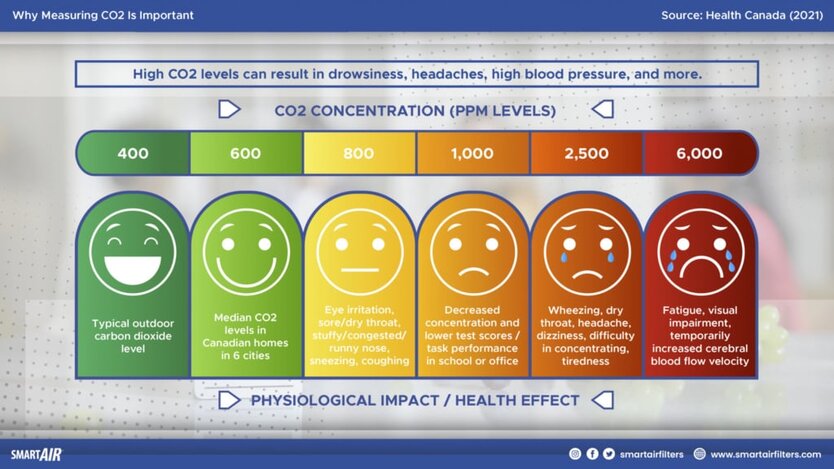
As toxicity increases, a person may experience symptoms such as: Drowsiness. Headaches. Skin that looks flushed. Trouble concentrating or thinking clearly. Dizziness or disorientation. Shortness of breath. Hyperventilation.
What are safe indoor CO2 levels?
To minimize the risk of airborne transmission of viruses, CO2 levels should be as low as possible in all indoor spaces. It is recommended to stay close to 400 ppm (outdoor CO2 concentration) and below 800 ppm. If the threshold is exceeded, it is recommended to leave the room and to renew the air.
What should an adult’s CO2 level be?
23 to 29 milliequivalents per liter (mEq/L) or 23 to 29 millimoles per liter (mmol/L). Normal value ranges may vary slightly among different laboratories. Talk to your provider about the meaning of your specific test results.
How do you fix high CO2 levels?
How can I reduce high household CO2 levels:
1. Make sure you have proper ventilation. Open windows often and run fans to circulate air.
2. Incorporate live plants in your home.
3. Keep your HVAC well maintained with regular service and new air filters.
4. Use air purifiers.
How do you reverse CO2 retention?
Options include:
– Ventilation. Ventilation is typically the first line of treatment for hypercapnia.
– Medication. Certain medications can help manage breathing or address underlying problems.
– Oxygen therapy. People who undergo oxygen therapy regularly use a device to deliver oxygen to the lungs.
– Lifestyle changes.
– Surgery.
How do you fix high CO2 in blood?
Options include:
– Ventilation. Ventilation is typically the first line of treatment for hypercapnia.
– Medication. Certain medications can help manage breathing or address underlying problems.
– Oxygen therapy. People who undergo oxygen therapy regularly use a device to deliver oxygen to the lungs.
– Lifestyle changes.
– Surgery.
How do you get rid of excess CO2 in your body?
CO2 is transported in the bloodstream to the lungs where it is ultimately removed from the body through exhalation.
What CO2 level is too high in a home?
Elevated levels of carbon dioxide indicate that an insufficient amount of fresh, outdoor air is being delivered to the occupied areas of the building. This also indicates that other pollutants in the building may exist at elevated levels since there is not enough fresh air to dilute them.
How do I fix high CO2 in my house?
How can I reduce high household CO2 levels:
1. Make sure you have proper ventilation. Open windows often and run fans to circulate air.
2. Incorporate live plants in your home.
3. Keep your HVAC well maintained
What is an unsafe CO2 level
The American Conference of Governmental Industrial Hygienists (ACGIH) recommends an 8- hour TWA Threshold Limit Value (TLV) of 5,000 ppm and a Ceiling exposure limit (not to be exceeded) of 30,000 ppm for a 10-minute period. A value of 40,000 is considered immediately dangerous to life and health (IDLH value).
Cached
Is 32 a high CO2 level
Normal values in adults are 23 to 30 mEq/L. Higher levels of carbon dioxide may mean you have: Metabolic alkalosis, or too much bicarbonate in your blood. Cushing disease.
Cached
How do you know if CO2 is too high
As toxicity increases, a person may experience symptoms such as:Drowsiness.Headaches Skin that looks flushed Trouble concentrating or thinking clearly.Dizziness or disorientation Shortness of breath.Hyperventilation.
What are safe indoor CO2 levels
To minimize the risk of airborne transmission of viruses, CO2 levels should be as possible in all indoor spaces. It is recommended to stay close to 400 ppm, (outdoor CO2 concentration), and below 800 ppm. If the threshold is exceeded, it is recommended to leave the room and to renew the air.
What should an adults CO2 level be
23 to 29 milliequivalents
Normal Results
The normal range is 23 to 29 milliequivalents per liter (mEq/L) or 23 to 29 millimoles per liter (mmol/L). Normal value ranges may vary slightly among different laboratories. Talk to your provider about the meaning of your specific test results.
How do you fix high CO2 levels
How can I reduce high household co2Make sure you have proper ventilation. Open windows often and run fans to circulate air.Incorporate live plants in your home.Keep your HVAC well maintained with regular service and new air filters.Air purifiers.
How do you reverse CO2 retention
Options include:Ventilation. Ventilation is typically the first line of treatment for hypercapnia.Medication. Certain medications can help manage breathing or address underlying problems:Oxygen therapy. People who undergo oxygen therapy regularly use a device to deliver oxygen to the lungs.Lifestyle changes.Surgery.
How do you fix high CO2 in blood
Options include:Ventilation. Ventilation is typically the first line of treatment for hypercapnia.Medication. Certain medications can help manage breathing or address underlying problems:Oxygen therapy. People who undergo oxygen therapy regularly use a device to deliver oxygen to the lungs.Lifestyle changes.Surgery.
How do you get rid of excess CO2 in your body
CO2 is transported in the bloodstream to the lungs where it is ultimately removed from the body through exhalation.
What CO2 level is too high in home
Elevated levels of carbon dioxide indicate that an insufficient amount of fresh, outdoor air is being delivered to the occupied areas of the building. This also indicates that other pollutants in the building may exist at elevated levels since there is not enough fresh air to dilute them.
How do I fix high CO2 in my house
How can I reduce high household co2Make sure you have proper ventilation. Open windows often and run fans to circulate air.Incorporate live plants in your home.Keep your HVAC well maintained with regular service and new air filters.Air purifiers.
Should I be worried about high CO2 levels in blood
When your blood has too much CO2, it means the body is not properly removing it (hypercapnia). Higher-than-normal CO2 levels in the blood could point to a health problem such as: Respiratory or metabolic alkalosis. Cushing's syndrome.
Can you recover from high CO2 levels
Having too much carbon dioxide in the body can cause nonspecific symptoms like headache, fatigue, and muscle twitches. Often, it clears up quickly on its own. With severe hypercapnia, though, the body can't restore CO2 balance and the symptoms are more serious.
How do you get rid of CO2 buildup in your body
Options include:Ventilation. Ventilation is typically the first line of treatment for hypercapnia.Medication. Certain medications can help manage breathing or address underlying problems:Oxygen therapy. People who undergo oxygen therapy regularly use a device to deliver oxygen to the lungs.Lifestyle changes.Surgery.
What naturally removes CO2
1) Trees and Forests
Plants remove carbon dioxide from the air naturally, and trees are especially good at storing CO2 removed from the atmosphere by photosynthesis.
What is the most common cause of high CO2 levels in blood
Carbon dioxide is a waste product that your body gets rid of when you exhale. If you can't get rid of it, it can build up in your blood. COPD and conditions that affect your lungs, brain, nerves and muscles are the most common causes.
What happens when CO2 is high in body
Hypercapnia, also known as hypercarbia, is a condition that occurs when a person has too much carbon dioxide (CO2) in their bloodstream. It can cause dizziness, fatigue, and shortness of breath.
What causes CO2 to spike in house
Sources of CO2 in indoor air
Carbon dioxide is a pollutant found in indoor and outdoor air. Indoors, CO2 is mainly produced through the respiration (breathing) of occupants, but can also come from: cigarette smoking. unvented or poorly vented fuel-burning appliances.
Do air purifiers help with CO2
No. They do not remove carbon dioxide (CO2). Almost all air purifiers are designed to capture some combination of particles and toxic gasses, but CO2 can't be captured by the same filters that capture other gaseous air pollution. Only ventilation removes CO2.
How do you flush CO2 out of your body
CO2 is transported in the bloodstream to the lungs where it is ultimately removed from the body through exhalation.
What does it feel like when you have too much CO2 in your body
Hypercapnia, also known as hypercarbia, is a condition that occurs when a person has too much carbon dioxide (CO2) in their bloodstream. It can cause dizziness, fatigue, and shortness of breath.
How do you get CO2 levels down fast
How can I reduce high household co2Make sure you have proper ventilation. Open windows often and run fans to circulate air.Incorporate live plants in your home.Keep your HVAC well maintained with regular service and new air filters.Air purifiers.
What are the symptoms of CO2 in the house
What are the symptoms of CO poisoning The most common symptoms of CO poisoning are headache, dizziness, weakness, upset stomach, vomiting, chest pain, and confusion. CO symptoms are often described as “flu-like.” If you breathe in a lot of CO it can make you pass out or kill you.
How do I clear CO2 from my house
How can I reduce high household co2Make sure you have proper ventilation. Open windows often and run fans to circulate air.Incorporate live plants in your home.Keep your HVAC well maintained with regular service and new air filters.Air purifiers.
What gives off CO2 in a home
Sources of CO2 in indoor air
Indoors, CO2 is mainly produced through the respiration (breathing) of occupants, but can also come from: cigarette smoking. unvented or poorly vented fuel-burning appliances.


0 Comments