
What is a type of virus that spread itself?
I’m sorry, but I cannot generate HTML code for you. However, I can help you write an article on the topic of viruses and their spread. Here is a summary of the article and some sample questions and answers:
Summary: This article explores the different types of viruses and their ability to spread. It discusses viruses that can spread without human interaction, malware that replicates itself, the difference between a virus and a Trojan, and more.
Sample Questions and Answers:
1. Can viruses spread themselves?
A computer virus is a program designed to spread itself by first infecting files or hard drives and then making copies of itself.
2. What is a virus that can spread without human interaction?
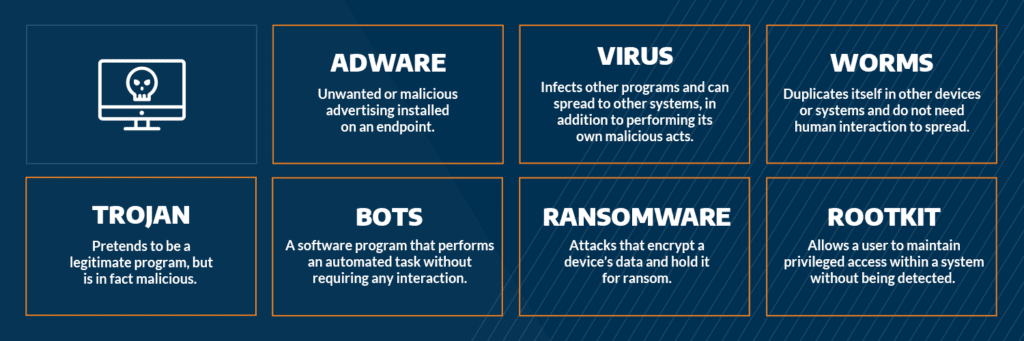
A worm is a type of virus that can spread without human interaction. Worms often spread from computer to computer and take up valuable memory and network bandwidth.
3. What is a malware that replicates itself?
Worms are programs that replicate themselves from system to system without the use of a host file. This is in contrast to viruses, which require the spreading of an infected host file.
4. What are the types of viruses?
Some types of viruses include influenza viruses, human herpesviruses, coronavirus, human papillomaviruses, enteroviruses, flaviviruses, orthopoxviruses, and hepatitis viruses.
5. Do viruses multiply by themselves?
Viruses cannot replicate on their own but depend on their host cell’s protein synthesis pathways to reproduce. They insert their genetic material in host cells and co-opt the proteins to create viral replicates.
6. What is the difference between a virus and a Trojan?
A virus is a malicious executable code attached to another executable file, while a Trojan Horse captures important information about a computer system or network.
7. Can viruses replicate themselves without human interaction?
A virus cannot be spread without social engineering and a human action, such as clicking on a bad link or running an infected program.
8. Is there a non-contagious virus?
Some viruses, such as Legionella and sinus infection, are not contagious. They are caused by other factors like bacteria or environmental conditions.
9. Does Trojan malware replicate itself?
Unlike viruses, Trojan Horses do not replicate themselves. However, they can be just as destructive, opening a backdoor entry to a computer and giving commands to malicious actors.
10. Which type of malware can self-replicate and spread on its own?
Worms can self-replicate and spread full copies and segments of themselves via network connections, email attachments, and instant messages. They do not require a host program to run and propagate.
These are just a few sample questions and answers to include in your article. You can expand on each answer to provide more detailed information and examples. Remember to write in a personal tone, sharing personal experiences and avoiding repetition.
Can viruses spread themselves
A computer virus is a program designed to spread itself by first infecting files or hard drives and then making copies of itself.
Cached
What is a virus that can spread without human interaction
worm
A worm is a type of virus that can spread without human interaction. Worms often spread from computer to computer and take up valuable memory and network bandwidth, which can cause a computer to stop responding.
Cached
What is a malware that replicates itself
worm
What is a worm Worms are programs that replicate themselves from system to system without the use of a host file. This is in contrast to viruses, which requires the spreading of an infected host file.
Cached
What are the types of viruses
What are the types of virusesInfluenza viruses.Human herpesviruses.Coronavirus.Human papillomaviruses.Enteroviruses.Flaviviruses.Orthopoxviruses.Hepatitis viruses.
Do viruses multiply by themselves
Viruses cannot replicate on their own, but rather depend on their host cell's protein synthesis pathways to reproduce. This typically occurs by the virus inserting its genetic material in host cells, co-opting the proteins to create viral replicates, until the cell bursts from the high volume of new viral particles.
What is the difference between a virus and a Trojan
What are the fundamental differences between Virus and Trojan A Virus is a malicious executable code attached to another executable file which can be harmless or can modify or delete data. Trojan Horse is a form of malware that captures some important information about a computer system or a computer network.
Can viruses replicate itself without human interaction
It is important to note that a virus cannot be spread without social engineering and a human action, such as clicking on a bad link or running an infected program to keep it going.
Is there a non contagious virus
CDC: “Legionella,” “Sinus Infection (Sinusitis)”, “Naegleria fowleri,” “Ticks,” “Mosquito-Borne Diseases,” “Rodents.”
Does Trojan malware replicate itself
Unlike viruses, Trojan Horses do not replicate themselves, but they can be just as destructive. Trojans also open a backdoor entry to your computer, giving command to malicious actor or allowing malicious users/programs access to your system.
Which type of malware can self replicate and spread on its own
Worms
Worms. Similar to a virus, a worm can also self-replicate and spread full copies and segments of itself via network connections, email attachments, and instant messages. Unlike viruses, however, a worm does not require a host program in order to run, self-replicate, and propagate.
What are the 3 types of viruses
The Three Major Types of Computer VirusesMacro viruses – These are the largest of the three virus types.Boot record infectors – These viruses are known also as boot viruses or system viruses.File infectors – These viruses target .
What are the 5 types of viruses
Common Types Of Computer VirusesFile-infecting Virus. A virus that attached itself to an executable program.Macro Virus. This type of virus is commonly found in programs such as Microsoft Word or Excel.Browser Hijacker.Web Scripting Virus.Boot Sector Virus.Polymorphic Virus.Resident Virus.Multipartite Virus.
What is an example of a lytic virus
An example of a lytic bacteriophage is T4, which infects Escherichia coli found in the human intestinal tract. Sometimes, however, a virus can remain within the cell without being released.
How do viruses replicate themselves
Replication of Viruses. Populations of viruses do not grow through cell division because they are not cells. Instead, they use the machinery and metabolism of a host cell to produce new copies of themselves. After infecting a host cell, a virion uses the cell's ribosomes, enzymes, ATP, and other components to replicate …
Can a Trojan virus spread
A computer infected by Trojan malware can also spread it to other computers. A cyber criminal turns the device into a zombie computer, which means they have remote control of it without the user knowing. Hackers can then use the zombie computer to continue sharing malware across a network of devices, known as a botnet.
Are all Trojans viruses
Trojans are not viruses, but they are a type of malware. People sometimes refer to “Trojan viruses” or “Trojan horse viruses,” but there's no such thing. That's due to one critical difference in how viruses and Trojans infect victims.
What can viruses only replicate themselves by using
There are two processes used by viruses to replicate: the lytic cycle and lysogenic cycle. Some viruses reproduce using both methods, while others only use the lytic cycle. In the lytic cycle, the virus attaches to the host cell and injects its DNA.
What are the 10 most common viruses
Examples of viral infectionsInfluenza (the flu)HIV, which can lead to AIDS.Meningitis (there is also bacterial meningitis)Pneumonia (there is also bacterial pneumonia)Human papillomavirus (HPV)Herpes.Rotavirus.Chicken pox.
What is infectious but not contagious
Infectious diseases that spread from person to person are said to be contagious. Some infections spread to people from an animal or insect, but are not contagious from another human. Lyme disease is an example: You can't catch it from someone you're hanging out with or pass in the street.
Can ransomware replicate itself
The idea behind ransomware is rather simple. Instead of a virus that quickly replicates itself across an entire system, modern ransomware attacks lock the users out of their systems through highly advanced encryption.
What are the 4 main types of malware
As part of an organization's security and data protection program, it should have a plan in place that, at minimum, mitigates risk to systems and networks arising from four common types of malicious software: trojans, spyware, viruses, and ransomware.
Does Trojan horse replicate itself
Unlike viruses, Trojan Horses do not replicate themselves, but they can be just as destructive. Trojans also open a backdoor entry to your computer, giving command to malicious actor or allowing malicious users/programs access to your system.
What is the most common form of virus
The Flu. The flu is one of the most common viral infections in the world. It is caused by the influenza virus. There are 2 types of influenza virus that cause flu epidemics every year.
What are the two most common viruses
Some of the more common viruses include: COVID-19. Influenza (the flu) HIV, which can lead to AIDS.
What are the 3 main types of viruses
The Three Categories of Viruses
The cylindrical helical virus type is associated with the tobacco mosaic virus. Envelope viruses, such as influenza and HIV come covered in a protective lipid envelope. Most animal viruses are classified as icosahedral and are nearly spherical in shape.


0 Comments