
What is an unsafe level of carbon dioxide?
Summary of Article: What is an unsafe level of carbon dioxide?
A carbon dioxide (CO2) blood test helps healthcare providers determine if the body is balancing electrolytes properly. Results outside the normal range of 20 to 29 millimoles per liter (mmol/L) may point to a more serious issue with the kidneys or lungs.
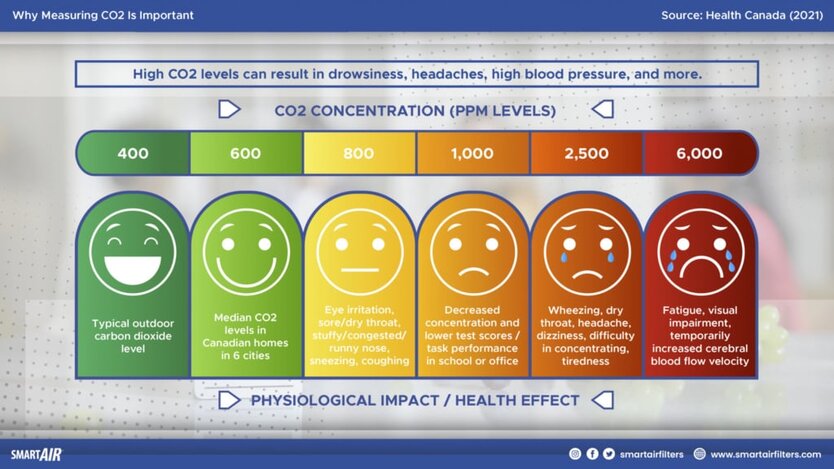
Keeping CO2 levels less than 700ppm above the outdoor air concentration can be an indication that sufficient outdoor air is being brought into your indoor air environment. It is recommended to stay as close to 400ppm (outdoor CO2 concentration) and below 800ppm.
The normal range is 23 to 29 milliequivalents per liter (mEq/L) or 23 to 29 millimoles per liter (mmol/L). Normal value ranges may vary slightly among different laboratories. Talk to your provider about the meaning of your specific test results.
Normal values in adults are 23 to 30 mEq/L. Higher levels of carbon dioxide may mean you have: Metabolic alkalosis, or too much bicarbonate in your blood. Cushing disease.
CO2 is transported in the bloodstream to the lungs where it is ultimately removed from the body through exhalation.
Normal values in adults are 23 to 30 mEq/L. Higher levels of carbon dioxide may mean you have: Metabolic alkalosis, or too much bicarbonate in your blood.
Elevated levels of carbon dioxide indicate that an insufficient amount of fresh, outdoor air is being delivered to the occupied areas of the building. This also indicates that other pollutants in the building may exist at elevated levels since there is not enough fresh air to dilute them.
Gas masks may be of limited use in high CO2 concentrations due to the lack of oxygen. Hence it has been recommended that working or living areas should be immediately evacuated when concentrations exceed 1.5% by volume (the occupational short-term exposure limit value).
CO2 is transported in the bloodstream to the lungs where it is ultimately removed from the body through exhalation.
As toxicity increases, a person may experience symptoms such as: Drowsiness, Headaches, Skin that looks flushed, Trouble concentrating or thinking clearly, Dizziness or disorientation, Shortness of breath, Hyperventilation.
Normal values in adults are 23 to 30 mEq/L. Higher levels of carbon dioxide may mean you have: Metabolic alkalosis, or too much bicarbonate in your blood. Cushing disease.
The O2 needed for cellular respiration is obtained via inhalation. The CO2 that is generated is removed from the body via exhalation.
How much CO2 is too high
A carbon dioxide (CO2) blood test helps healthcare providers determine if the body is balancing electrolytes properly. Results outside the normal range of 20 to 29 millimoles per liter (mmol/L) may point to a more serious issue with the kidneys or lungs.
What is a safe CO2 limit
CO2 Levels and your Health
Keeping CO2 levels less than 700ppm above the outdoor air concentration can be an indication that sufficient outdoor air is being brought into your indoor air environment. It is recommended to stay as close to 400ppm (outdoor CO2 concentration) and below 800ppm.
What CO2 level is OK
Normal Results
The normal range is 23 to 29 milliequivalents per liter (mEq/L) or 23 to 29 millimoles per liter (mmol/L). Normal value ranges may vary slightly among different laboratories. Talk to your provider about the meaning of your specific test results.
Is a CO2 level of 30 bad
Normal values in adults are 23 to 30 mEq/L. Higher levels of carbon dioxide may mean you have: Metabolic alkalosis, or too much bicarbonate in your blood. Cushing disease.
How do you get rid of excess CO2 in your body
CO2 is transported in the bloodstream to the lungs where it is ultimately removed from the body through exhalation.
Is 31 a high CO2 level
Normal values in adults are 23 to 30 mEq/L. Higher levels of carbon dioxide may mean you have: Metabolic alkalosis, or too much bicarbonate in your blood.
What CO2 level is too high in home
Elevated levels of carbon dioxide indicate that an insufficient amount of fresh, outdoor air is being delivered to the occupied areas of the building. This also indicates that other pollutants in the building may exist at elevated levels since there is not enough fresh air to dilute them.
At what CO2 level should you evacuate
Gas masks may be of limited use in high CO2 concentrations due to the lack of oxygen. Hence it has been recommended that working or living areas should be immediately evacuated when concentrations exceed 1.5% by volume (the occupational short-term exposure limit value).
How do you get rid of carbon dioxide in your body
CO2 is transported in the bloodstream to the lungs where it is ultimately removed from the body through exhalation.
What are symptoms of high CO2 levels
As toxicity increases, a person may experience symptoms such as:Drowsiness.Headaches Skin that looks flushed Trouble concentrating or thinking clearly.Dizziness or disorientation Shortness of breath.Hyperventilation.
Should I be concerned about a CO2 level of 32
Normal values in adults are 23 to 30 mEq/L. Higher levels of carbon dioxide may mean you have: Metabolic alkalosis, or too much bicarbonate in your blood. Cushing disease.
How do you get rid of excess CO2 in your lungs
The O2 needed for cellular respiration is obtained via inhalation. The CO2 that is generated is removed from the body via exhalation.
What are the symptoms of too much carbon dioxide in the body
As toxicity increases, a person may experience symptoms such as:Drowsiness.Headaches Skin that looks flushed Trouble concentrating or thinking clearly.Dizziness or disorientation Shortness of breath.Hyperventilation.
How do I know if I have too much CO2 in my body
Symptoms of hypercapnia include:Shortness of breath.Headaches.Persistent tiredness or sluggishness during the day.Disorientation.Confusion or altered mental state.Paranoia.Depression.Seizures.
How do you reverse CO2 retention
Options include:Ventilation. Ventilation is typically the first line of treatment for hypercapnia.Medication. Certain medications can help manage breathing or address underlying problems:Oxygen therapy. People who undergo oxygen therapy regularly use a device to deliver oxygen to the lungs.Lifestyle changes.Surgery.
How do I keep my CO2 levels down in my house
You can lower levels of CO2 indoors by increasing ventilation and controlling the sources of CO2. using mechanical ventilation strategies. You can find more information on how to use both natural and mechanical ventilation to improve indoor air quality.
How high is too high for CO2 in house
High CO2 levels, generally over 1000 ppm, indicate a potential problem with air circulation and fresh air in a room or building. In general, high CO2 levels indicate the need to examine the HVAC system. High carbon dioxide levels can cause poor air quality and can even extinguish pilot lights on gas-powered appliances.
Does drinking water help get rid of carbon dioxide
As counter-intuitive as it may sound, your body needs water to breath: the lungs consist of 85% water. In order to take in oxygen and eliminate carbon dioxide, our lungs must be continually moistened with water.
How do you get rid of high CO2 levels
Options include:Ventilation. Ventilation is typically the first line of treatment for hypercapnia.Medication. Certain medications can help manage breathing or address underlying problems:Oxygen therapy. People who undergo oxygen therapy regularly use a device to deliver oxygen to the lungs.Lifestyle changes.Surgery.
Is 34 high for CO2 in blood
Normal values in adults are 23 to 30 mEq/L. Higher levels of carbon dioxide may mean you have: Metabolic alkalosis, or too much bicarbonate in your blood. Cushing disease.
How do you get CO2 levels down fast
How can I reduce high household co2Make sure you have proper ventilation. Open windows often and run fans to circulate air.Incorporate live plants in your home.Keep your HVAC well maintained with regular service and new air filters.Air purifiers.
What are the symptoms of too much carbon dioxide in the lungs
In many cases, a higher CO2 level leads to mild symptoms including headache and fatigue. When the mechanisms designed to protect this balance in your body no longer work, more severe symptoms of difficulty breathing, respiratory failure, seizure, and coma can occur.
How do you flush CO2 out of your body
CO2 is transported in the bloodstream to the lungs where it is ultimately removed from the body through exhalation.
How do you get rid of CO2 buildup in your body
Options include:Ventilation. Ventilation is typically the first line of treatment for hypercapnia.Medication. Certain medications can help manage breathing or address underlying problems:Oxygen therapy. People who undergo oxygen therapy regularly use a device to deliver oxygen to the lungs.Lifestyle changes.Surgery.
How do you get rid of CO2 in your body naturally
Exercise forces the muscles to work harder, which increases the body's breathing rate, resulting in a greater supply of oxygen to the muscles. It also improves circulation, making the body more efficient in removing the excess carbon dioxide that the body produces when exercising.


0 Comments