
Are VPNs any good?
Summary of the Article
Are VPNs any good? – In this article, we will discuss the advantages and disadvantages of using a VPN, address common questions regarding VPN usage, and explore the pros and cons of using a VPN.
Disadvantages of Using a VPN
1. Slower Internet Speeds: Using a VPN can often lead to slower internet speeds due to the encryption and routing processes involved.
2. False Sense of Security: While VPNs provide a certain level of security, they are not foolproof, and users should not solely rely on them for complete online protection.
3. Increased Data Usage: When using a VPN, your data is encrypted, which can result in higher data usage compared to not using a VPN.
4. Illegal in Some Countries: VPN usage is prohibited in certain countries, and individuals can face legal consequences for using them.
5. Loss of Access to Some Websites: Some websites may block or limit access to users who are using VPNs.
6. VPN Logging: Some VPN providers may keep logs of user activity, which can potentially compromise privacy and security.
7. Cost: While there are free VPN options available, quality VPN services usually require a subscription fee.
Questions and Detailed Answers
1. Can you be tracked if you use VPN?
A premium quality VPN encrypts data and hides your IP address, making it difficult for anyone to track your online activity. However, if you provide personal information to websites or services while using a VPN, they may be able to track you.
2. When shouldn’t I use a VPN?
You may want to avoid using a VPN in situations where it may reduce your internet speed, increase your mobile data usage, or in countries where VPN usage is illegal and can result in fines or penalties.
3. When should you not use a VPN?
A VPN is typically used for data protection and secure browsing. However, there may be times when you need to turn off your VPN to access local sites or devices, such as streaming platforms or a printer.
4. Does a VPN stop your location from being tracked?
A VPN encrypts your online traffic, hides your IP address, and masks your location. It provides an additional layer of privacy and prevents websites, ISPs, and even the government from tracking your location.
5. How does Google know I’m using a VPN?
Google can sometimes determine your approximate location by analyzing the signal strengths of Wi-Fi networks around you. If you have Wi-Fi enabled while using a VPN, it can give some indication of your location.
6. Is it okay to leave a VPN on all the time?
Yes, it is generally recommended to keep your VPN turned on at all times for maximum online security. This helps to encrypt your traffic and prevent interception of your personal data.
7. What are the pros and cons of VPN?
| Pros | Cons |
|---|---|
| Protects your online privacy | Cheap or free VPNs may be slow, insecure, or collect your data |
| Masks your IP address | Premium VPNs require a subscription fee |
| Handy protection tool for activists in hostile environments | VPNs do not protect against data hoarding on social media |
8. Is it safer with or without a VPN?
Using a reliable VPN can enhance internet security by encrypting your data and preventing snooping by government agencies. However, VPNs may not offer complete protection in all scenarios.
9. Can the FBI track a VPN?
Live, encrypted VPN traffic is difficult to track. Law enforcement agencies would need to contact your internet service provider (ISP) and VPN provider to gather information about your online activities.
10. Can police track online purchases made with a VPN?
It is challenging for police or government agencies to track online purchases made using a VPN. They would need to contact your ISP to gather information, and the VPN encryption would make it difficult to track the actual transaction.
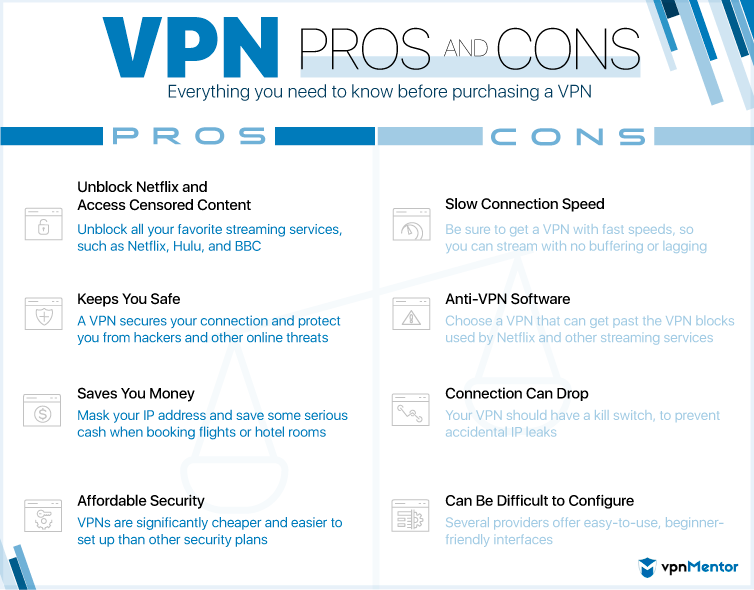
What are the disadvantages of using a VPN
7 Disadvantages of Using a VPNSlower Internet Speeds.VPNs Can Give You a False Sense of Security.VPNs Increase Your Data Usage.VPNs Are Illegal in Some Countries.Loss of Access to Some Websites.Some Providers Keep VPN Logs.Good VPNs Cost Money.
Cached
Can you be tracked if you use VPN
A premium quality VPN encrypts data and hides your IP address by routing your activity through a VPN server; even if someone tries to monitor your traffic, all they'll see is the VPN server's IP and complete gibberish. Beyond that, you can only be tracked with information you provide to sites or services you log into.
When I shouldn’t use VPN
Why shouldn't I use a VPNA VPN might reduce your connection speed even if your internet service provider isn't throttling your speed;Using a VPN on mobile will increase your mobile data usage;Using a VPN is considered an offense in some countries, and you can get fined or even be incarcerated for it.
When should you not use a VPN
VPNs ensure data protection from hackers and secure browsing. In result, this prevents advertisers or ISPs from accessing your browsing data. At the same time, there may be times when you need to turn your VPN off. That is when you need to access local sites or devices, such as streaming platforms or a printer.
Does a VPN stop your location from being tracked
A VPN encrypts and conceals your entire online traffic. It hides your IP address, location, and all digital activities, including downloads, streaming, and gaming activities. A VPN hides your browsing history from your ISP, websites, online snoopers, and even the government.
How does Google know Im using a VPN
Also, Google has a database of the world's existing Wi-Fi networks and access points—which it uses to triangulate your location by measuring the signal strengths of the Wi-Fi networks you're scanning on your device, as long as you've turned on Wi-Fi.
Is it OK to leave VPN on all the time
The short answer is: Yes, you should keep your VPN on at all times. By encrypting the traffic that you send and receive, VPNs can prevent your personal data from being intercepted by third parties. This data includes your web browsing history, physical location, IP address, and more.
What are pros and cons of VPN
VPN pros and cons
| Pros | Cons |
|---|---|
| Protects your online privacy | Cheap or free VPNs are slow, insecure and may collect your data |
| Masks your IP address | Premium VPNs cost money |
| Works as a handy protction tool for activists in hostile environments | VPNs do not protect you from data hoarding on social media |
Is it safer with or without VPN
Using a reliable virtual private network (VPN) can be a safe way to browse the internet. VPN security can protect from IP and encrypt internet history and is increasingly being used to prevent snooping on by government agencies. However, VPNs won't be able to keep you safe in all scenarios.
Can the FBI track a VPN
Can police track online purchases made with a VPN There is no way to track live, encrypted VPN traffic. That's why police or government agencies who need information about websites you visited have to contact your internet service provider (ISP for short), and only then your VPN provider.
Do VPNs really hide your IP
No, a VPN cannot make you anonymous. They help secure what you're doing, but your ISP still knows when you're using the internet. They just can't see what you're doing, what sites you visit, or how long you've been on a site.
Can someone see my internet history if I use their WiFi with VPN
VPNs establish a protected connection, meaning no one can see what you are doing. So, for example, a WiFi router or Internet service provider only sees jumbled data when you're browsing on a VPN.
Does a VPN hide your IP address
A VPN hides your IP address and encrypts your online activity for maximum privacy and security. It does this by connecting you to an encrypted, private VPN server, instead of the ones owned by your ISP. This means your activity can't be tracked, stored, or mishandled by third-parties.
Does the average person need a VPN
VPNs can be useful, but they're not necessary for every person or every situation, especially now that so much web traffic is encrypted using HTTPS, the secure protocol whose initials you see at the start of most web addresses.
Why should you not always use a VPN
Using a VPN at home is preferable, advised even, but it isn't always essential. The main reason it may not be necessary, is that your internet activity should already be shielded by your password-protected Wi-Fi network. The other concern is connecting to a remote server can slow your connection speed.
Can police track me even if I use VPN
Can police track online purchases made with a VPN There is no way to track live, encrypted VPN traffic. That's why police or government agencies who need information about websites you visited have to contact your internet service provider (ISP for short), and only then your VPN provider.
Can the government spy on me if I use a VPN
Remember that, in almost all cases, the government can only see that you're using a VPN. They can't find what you're doing online, your internet history, or your actual IP address. Your VPN encrypts all of this data.
What are the pros and cons of using a VPN
VPN pros and cons
| Pros | Cons |
|---|---|
| Protects your online privacy | Cheap or free VPNs are slow, insecure and may collect your data |
| Masks your IP address | Premium VPNs cost money |
| Works as a handy protction tool for activists in hostile environments | VPNs do not protect you from data hoarding on social media |
Can my parents see my search history if I use a VPN
Good Virtual Private Networks (VPNs) ensure there's no trace of your online activity and they increase your online security and privacy. VPNs encrypt all your data, and then tunnel your traffic through secure servers.
Can VPN be tracked by police
Can police track online purchases made with a VPN There is no way to track live, encrypted VPN traffic. That's why police or government agencies who need information about websites you visited have to contact your internet service provider (ISP for short), and only then your VPN provider.
How do websites know you are using a VPN
Websites and other online services you visit can see the IP address of the VPN server you're connected to. If they want to, they can check that IP address against lists of known VPN and proxy servers to see if you're using a VPN.
Is having a VPN illegal
Yes, VPNs are legal in most countries around the world, including the US, Canada, and most of Europe. However, you might risk heavy fines or even imprisonment for using a VPN in a country that bans it, for example, North Korea or Iraq.
Can real IP be traced through VPN
However, a VPN keeps your browsing activity safe. Even those who can see that you use a VPN (i.e., your ISP, websites you visit, or even hackers) can't access your data, real location, or any sensitive information.
When should a VPN not be used
Using VPN is illegal in many countries
Most VPN services are blocked by countries that consider private networks to be illegal. If VPN service is blocked, it shouldn't be used since the government may impose hefty fines and citizens may have to serve in jail for a short duration like 3-6 months.
Is it bad to have a VPN on 24 7
But if you're using a VPN for privacy reasons or to keep yourself anonymous online, then you should keep it on all the time. Since your VPN is your best form of protection against hackers and helps keep your information private, it's best to leave your VPN on whenever you're on the internet.


0 Comments