
What happens if I clear my TPM?
Module, provides an added layer of security for your system by securely storing authentication artifacts such as passwords, certificates, and encryption keys. Bypassing TPM may compromise the security of your system, so it is generally not recommended to bypass it.
Here are 15 questions and detailed answers about clearing TPM:
1. What does clearing TPM mean?
Clearing TPM means resetting the Trusted Platform Module to its default state, removing the owner authorization value and any stored keys. To reset TPM, a valid owner authorization value or a file containing the value is required.
2. What happens when TPM is turned off?
When TPM is disabled, certain features like the Windows Subsystem for Android or the ability to install updates may be lost.
3. Does TPM affect anything?
On a system with TPM, it can protect the key. Without TPM, software-based techniques such as PIN codes or biometric authentication (fingerprint or facial recognition) can be used instead.
4. Should I disable BitLocker before clearing TPM?
If TPM is being used for security features like BitLocker or DDPE, it is necessary to suspend the security before clearing TPM or replacing the system board.
5. Does resetting BIOS clear TPM?
To clear TPM, the “Clear” box should be checked in the BIOS settings. Reboot the system, enter the BIOS using F2, and ensure the “Activate the TPM” option is turned on.
6. Should I press F12 to clear TPM?
Pressing F12 clears TPM and restarts the system. The TPM will be cleared during the boot process.
7. Is enabling TPM good or bad?
Enabling TPM provides an additional layer of protection against potential malware accessing sensitive data stored in the system. It functions similar to the fingerprint or facial recognition system on a smartphone.
8. Is there a downside to turning on TPM?
Enabling TPM alone does not make files inaccessible. The TPM requires the operating system or specific programs to utilize its capabilities.
9. What information is stored in TPM?
TPM securely stores artifacts used for platform authentication, such as passwords, certificates, or encryption keys.
10. What is the disadvantage of disabling TPM?
Disabling TPM means that BitLocker encryption will not work, resulting in weaker security for your hard disk.
11. What is the difference between BitLocker with and without TPM?
When using BitLocker with TPM, the TPM stores the BitLocker password and decryption key securely. This provides an additional layer of security compared to BitLocker without TPM.
12. Is it okay to bypass TPM?
Bypassing TPM may compromise system security, so it is generally not recommended to bypass it.
Remember, clearing TPM should be done with caution and in consideration of the security features enabled on your system.
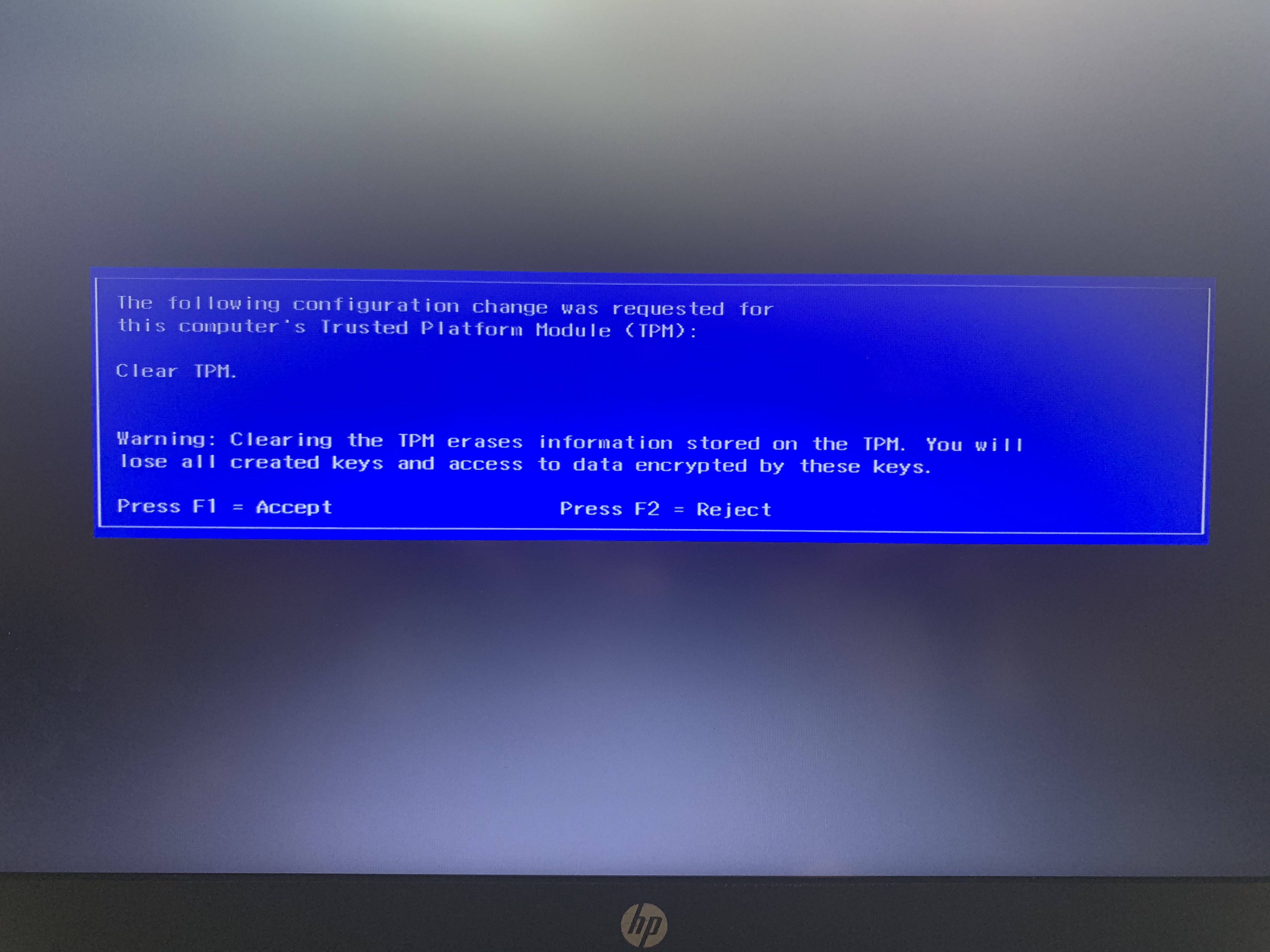
What does clear the TPM mean
The Clear-Tpm cmdlet resets the Trusted Platform Module (TPM) to its default state. A reset removes the owner authorization value and any keys stored in the TPM. To reset a TPM, you must provide a valid owner authorization value. You can enter an owner authorization value or specify a file that contains the value.
What happens when TPM is turned off
It is known that when TPM is disabled, you lose some features, such as Windows Subsystem for Android or the ability to install updates.
Does TPM affect anything
On a system that has a TPM, the TPM can protect the key. If a system does not have a TPM, software-based techniques protect the key. The additional information the user supplies can be a PIN value or, if the system has the necessary hardware, biometric information, such as fingerprint or facial recognition.
Should I disable BitLocker before clearing TPM
If TPM is used for security features such as BitLocker or DDPE, that security must be suspended before clearing the TPM or replacing the system board.
Does resetting BIOS clear TPM
To clear the TPM you must check the box saying: “Clear” to clear the TPM hard drive security encryption. You must reboot and re-enter the BIOS using F2 and "Activate the TPM" Ensure the “Activate” radio button is turned on in order to ensure the TPM option works.
Should I press F12 to clear the TPM
Click Clear TPM and restart the system. Press F12 to clear the TPM. The system will continue to boot and the TPM will be cleared.
Is enabling TPM good or bad
It's an added layer of protection so potential malware cannot access any credentials, encryption keys, and other very sensitive user data stored in your system. Think of the TPM as the fingerprint or facial recognition system on your smartphone. Without the correct biometrics, you can't access any information.
Is there a downside to turning on TPM
The TPM cannot do anything without your operating system or programs doing work with it. Just "enabling" the TPM will do absolutely nothing and will not by itself make files inaccessible.
What information is stored in TPM
TPM (Trusted Platform Module) is a computer chip (microcontroller) that can securely store artifacts used to authenticate the platform (your PC or laptop). These artifacts can include passwords, certificates, or encryption keys.
What is the disadvantage of disabling TPM
If TPM is disabled, Bitlocker will not work. So, your hard disk will not be encrypted (which is a stronger layer of security, than just password-protection of your session) with it.
What is the difference between BitLocker with and without TPM
"The TPM provides an extra layer of security by storing passwords and keys in a secure form. TPM with BitLocker provides more security." so when you encrypt windows with bitlocker and tpm is on, windows will store the bitlocker password and decryption key inside the tpm
Is it okay to bypass TPM
TPM, or Trusted Platform Module, is a physical chip that helps securely store private information used to authenticate your platform. Information like hardware certificates may be stored here. This means your computer is significantly more vulnerable to modern malware attacks without these requirements.
Should you clear TPM when reinstalling Windows 10
So, should you clear TPM during reset/reinstall According to the above analysis, we can conclude that it would be better to clear TPM if you want to sell a used computer. If you had encrypted your hard disk using BitLocker, the BitLocker recovery key could be restored from TPM.
Are keys stored in TPM
Each TPM has a master wrapping key, called the storage root key, which is stored within the TPM itself. The private portion of a storage root key, or endorsement key, that is created in a TPM is never exposed to any other component, software, process, or user.
Can TPM be tracked
No. A TPM mostly exists as secure storage for cryptographic keys and can perform some basic cryptographic functions.
Should I clear TPM when resetting computer
TPM is a security chip that provides additional security to your credentials so that they cannot be accessed by malware/3rd party outside the OS. Clearing the TPM does not remove the data, however, you may be asked for a Bitlocker code. Please do note it down before from your Microsoft account before clearing the same.
Can a PC run without TPM
So that you can run Windows without TPM 2.0, but your PC won't go with any key or minimal updates, which will lead to data risk, even the PC crashes. So we do not recommend bypassing TPM 2.0 while installing Windows 11.
Is TPM necessary for BitLocker
For BitLocker to use the system integrity check provided by a TPM, the computer must have TPM 1.2 or later versions. If a computer doesn't have a TPM, saving a startup key on a removable drive, such as a USB flash drive, becomes mandatory when enabling BitLocker.
Will clearing TPM erase Windows
Replies (4) No, it doesn't. It probably resets the settings applied to the TPM through BIOS / UEFI.
What is stored in the TPM
TPM (Trusted Platform Module) is a computer chip (microcontroller) that can securely store artifacts used to authenticate the platform (your PC or laptop). These artifacts can include passwords, certificates, or encryption keys.
Does clearing TPM remove Windows key
As the warning message hints, we can conclude that clearing TPM will erase all created keys related to the TPM such as the BitLocker recovery key. In addition, it will delete all data protected by these TPM-relevant keys, such as a sign-in PIN, virtual smart card, etc.
What information is stored on the TPM
TPM (Trusted Platform Module) is a computer chip (microcontroller) that can securely store artifacts used to authenticate the platform (your PC or laptop). These artifacts can include passwords, certificates, or encryption keys.
Is it OK to install Windows 11 without TPM
Important: An image install of Windows 11 will not check for the following requirements: TPM 2.0 (at least TPM 1.2 is required) and CPU family and model.
Is it worth upgrading to Windows 11 without TPM
In particular, if your computer doesn't have TPM 2.0, then upgrading is a bad idea. If your computer does meet the hardware requirements, then updating to Windows 11 isn't bad. However, as long as Windows 10 is still supported and receiving security updates, sticking with it isn't bad either.
What is the purpose of TPM BitLocker
The TPM is a hardware component installed in many newer computers by the computer manufacturers. It works with BitLocker to help protect user data and to ensure that a computer has not been tampered with while the system was offline.


0 Comments