
How are virus created?
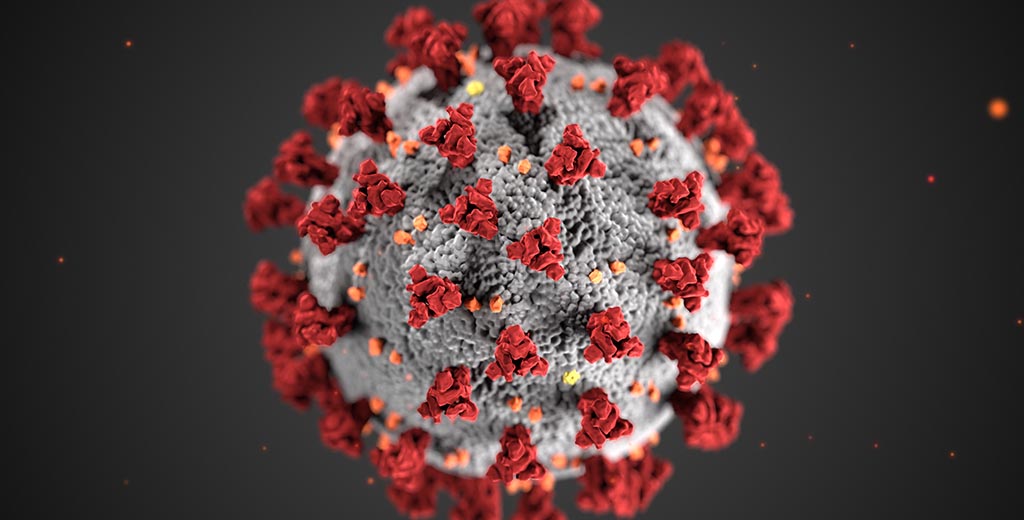
How are viruses made?
How are viruses made?
Viruses are simple, and are made up of up to three constitutive elements: A genome, made up of nucleic acids that can be DNA (like humans) or RNA. RNA is very similar to DNA; both are made up of chains of nucleotides (ACGT/U) that make up genes that are translated into proteins.
How are viruses created naturally?
Viruses might have come from broken pieces of genetic material inside early cells. These pieces were able to escape their original organism and infect another cell. In this way, they evolved into viruses. Modern-day retroviruses, like the Human Immunodeficiency Virus (HIV), work in much the same way.
When did the first virus appear on Earth?
The first viruses arose before all life. Over time, they adapted to new hosts. The oldest evidence of bacteria is found, for example, in so-called stromatolites, the oldest of which are 3.6 billion years old and were found in Australia. A direct proof of ancient viruses, however, is still not known.
Can viruses reproduce on their own?
A virus cannot replicate alone; instead, it must infect cells and use components of the host cell to make copies of itself.
How did the first virus start?
To date, no clear explanation for the origin(s) of viruses exists. Viruses may have arisen from mobile genetic elements that gained the ability to move between cells. They may be descendants of previously free-living organisms that adapted a parasitic replication strategy.
What created the first virus?
Abstract. Two scientists contributed to the discovery of the first virus, Tobacco mosaic virus. Ivanoski reported in 1892 that extracts from infected leaves were still infectious after filtration through a Chamberland filter-candle. Bacteria are retained by such filters, a new world was discovered: filterable pathogens…
How do viruses exist if they are not alive?
Outside of a host cell, viruses do not use any energy. They only become active when they come into contact with a host cell. Once activated, they use the host cell’s energy and tools to make more viruses. Because they do not use their own energy, some scientists do not consider them alive.
Where do viruses even come from?
Viruses may have arisen from mobile genetic elements that gained the ability to move between cells. They may be descendants of previously free-living organisms that adapted a parasitic replication strategy. Perhaps viruses existed before and led to the evolution of cellular life.
Did viruses exist before humans?
They existed 3.5 billion years before humans evolved on Earth. They’re neither dead nor alive. Their genetic material is embedded in our own DNA, constituting close to 10% of the human genome.
What would happen if viruses didn’t exist?
Without the intervention of viruses, we would not exist as a species. We could also not survive if viruses did not carry out ecosystem functions on which we depend. For example, about 95 percent of the living material in the oceans, by weight, is microbial, and these microbes produce about half of the oxygen on Earth.
Why is virus a living thing?
Viruses are not living things. Viruses are complicated assemblies of molecules, including proteins, nucleic acids, lipids, and carbohydrates, but on their own they can’t carry out all the necessary functions of life. They need to infect a living host cell in order to replicate and survive.
How are viruses made
Viruses are simple, and are made up of up to three constitutive elements: A genome, made up of nucleic acids that can be DNA (like humans) or RNA. RNA is very similar to DNA; both are made up of of chains of nucleotides (ACGT/U) that make up genes that are translated in proteins.
How are viruses created naturally
Viruses might have come from broken pieces of genetic material inside early cells. These pieces were able to escape their original organism and infect another cell. In this way, they evolved into viruses. Modern-day retroviruses, like the Human Immunodeficiency Virus (HIV), work in much the same way.
When did the first virus appear on Earth
The first viruses arose before all life. Over time, they adapted to new hosts. The oldest evidence of bacteria is found, for example, in so-called stromatolites, the oldest of which are 3.6 billion years old and were found in Australia. A direct proof of ancient viruses, however, is still not known.
Can viruses reproduce on their own
A virus cannot replicate alone; instead, it must infect cells and use components of the host cell to make copies of itself.
How did the first virus start
To date, no clear explanation for the origin(s) of viruses exists. Viruses may have arisen from mobile genetic elements that gained the ability to move between cells. They may be descendants of previously free-living organisms that adapted a parasitic replication strategy.
What created the first virus
Abstract. Two scientists contributed to the discovery of the first virus, Tobacco mosaic virus. Ivanoski reported in 1892 that extracts from infected leaves were still infectious after filtration through a Chamberland filter-candle. Bacteria are retained by such filters, a new world was discovered: filterable pathogens …
How do viruses exist if they are not alive
Outside of a host cell, viruses do not use any energy. They only become active when they come into contact with a host cell. Once activated, they use the host cell's energy and tools to make more viruses. Because they do not use their own energy, some scientists do not consider them alive.
Where do viruses even come from
Viruses may have arisen from mobile genetic elements that gained the ability to move between cells. They may be descendants of previously free-living organisms that adapted a parasitic replication strategy. Perhaps viruses existed before, and led to the evolution of, cellular life.
Did viruses exist before humans
They existed 3.5 billion years before humans evolved on Earth. They're neither dead nor alive. Their genetic material is embedded in our own DNA, constituting close to 10% of the human genome.
What would happen if viruses didn’t exist
Without the intervention of viruses, we would not exist as a species. We could also not survive if viruses did not carry out ecosystem functions on which we depend. For example, about 95 percent of the living material in the oceans, by weight, is microbial, and these microbes produce about half of the oxygen on Earth.
Why is virus a living thing
Viruses are not living things. Viruses are complicated assemblies of molecules, including proteins, nucleic acids, lipids, and carbohydrates, but on their own they can do nothing until they enter a living cell. Without cells, viruses would not be able to multiply. Therefore, viruses are not living things.
Can viruses be made from DNA
The virion, that is the complete infectious virus particle, includes a genome comprising one or a few molecules of either DNA or RNA, surrounded by a morphologically defined protein coat, the capsid; the capsid and the enclosed nucleic acid together constitute the nucleocapsid.
Why was virus invented
Motives for creating viruses can include seeking profit (e.g., with ransomware), desire to send a political message, personal amusement, to demonstrate that a vulnerability exists in software, for sabotage and denial of service, or simply because they wish to explore cybersecurity issues, artificial life and …
Who built the first virus
Brain, the first PC virus, began infecting 5.2" floppy disks in 1986. As Securelist reports, it was the work of two brothers, Basit and Amjad Farooq Alvi, who ran a computer store in Pakistan.
How was the first virus born
In our view, viruses originated from 'ancient' cells that existed before the last universal common ancestor (LUCA) diversified into modern cells (i.e., the three superkingdoms, Archaea, Bacteria, and Eukarya) [40]. There are multiple lines of evidence supporting this timing.
Who creates viruses
So who creates viruses Viruses are created by criminal organizations that act for money or for political ends. They want to harm a company or organization for different reasons. If a virus manages to insert itself into an organization's network, it can cost the organization large sums of money.
Do scientists think viruses are alive
So were they ever alive Most biologists say no. Viruses are not made out of cells, they can't keep themselves in a stable state, they don't grow, and they can't make their own energy. Even though they definitely replicate and adapt to their environment, viruses are more like androids than real living organisms.
Do viruses exist naturally
Viruses are found wherever there is life and have probably existed since living cells first evolved. The origin of viruses is unclear because they do not form fossils, so molecular techniques are used to investigate how they arose.
How did the first virus form
In our view, viruses originated from 'ancient' cells that existed before the last universal common ancestor (LUCA) diversified into modern cells (i.e., the three superkingdoms, Archaea, Bacteria, and Eukarya) [40]. There are multiple lines of evidence supporting this timing.
What do viruses need to reproduce
Viruses cannot replicate on their own, but rather depend on their host cell's protein synthesis pathways to reproduce. This typically occurs by the virus inserting its genetic material in host cells, co-opting the proteins to create viral replicates, until the cell bursts from the high volume of new viral particles.
What kills a virus in your body
Medicine that treats viral infections is called an antiviral. These medicines usually stop a virus from making copies of itself. They also may stop a virus from going into or leaving a cell. Many antivirals are made to target the virus and not the host cell.
How do viruses evolve if they are not alive
Viruses undergo evolution and natural selection, just like cell-based life, and most of them evolve rapidly. When two viruses infect a cell at the same time, they may swap genetic material to make new, "mixed" viruses with unique properties.
What do viruses feed off
Most infectious bacteria and viruses bind to sugars on the surface of our cells. Most of the viruses feed on sugar.
How much of human DNA is virus
Nearly one-tenth of the human genome contains snippets of viral DNA left over from ancient infections. These DNA fragments, called endogenous retroviruses (ERVs), have been passed along and modified over millions of years of evolution. Much of this viral DNA has eroded over time and is unlikely to have any function.
Who found the first virus
Dmitri Ivanowsky in 1892. He recognized an infectious agent, which caused tobacco mosaic disease and were smaller than bacteria. M.W. Beijerinek in 1898 called the filter 'Contagium vivum fluidum' and named it the 'virus'.


0 Comments