
Can you block ransomware?
Can Ransomware be Prevented?
Effective ransomware prevention requires a combination of good monitoring applications, frequent file backups, anti-malware software, and user training. Although no cyber-defenses reduce risk completely, you can greatly limit the chance attackers will be successful.
Can You Stop a Ransomware Attack?
One of the most important ways to stop ransomware is to have a very strong endpoint security solution. These solutions are installed on your endpoint devices and block any malware from infecting your systems.
How Can We Stop Ransomware?
Protection against ransomware – how to prevent an infection:
– Never click on unsafe links: Avoid clicking on links in spam messages or on unknown websites.
– Avoid disclosing personal information: If you receive a call, text message, or email from an untrusted source requesting personal information, do not reply.
Why Can’t Ransomware be Stopped?
Today’s ransomware and malware are sophisticated, using random extensions and file names, which makes detection by signature-based (blocked list) solutions ineffective. Cloud Secure uses advanced machine learning algorithms to uncover unusual data activity and detect a potential attack.
What is the Best Defense Against Ransomware?
Tips:
– Identify assets that are searchable via online tools and take steps to reduce that exposure.
– Protecting Against Ransomware.
– Understanding Patches and Software Updates.
– Using Caution with Email Attachments.
– SMB Security Best Practices.
– Website Security.
– Rising Ransomware Threat to Operational Technology Assets.
Does Ransomware Steal Data or Just Lock It?
Ransomware has been one of the most popular and successful malware types these days. With it, cybercriminals can successfully block access to your own data and devices, steal sensitive information, and earn a fortune by forcing you to pay a ransom.
Can You Get Around Ransomware?
The data that has been encrypted up to this point remains encrypted, but the ransomware virus can be stopped. Early detection means that the malware can be prevented from spreading to other devices and files. If you back up your data externally or in cloud storage, you will be able to recover your encrypted data.
Is Ransomware Easy to Get Rid Of?
Once ransomware has infected a system, it can be difficult — if not impossible — to remove. However, ransomware is often detected only after it is announced by an attacker, for example, via a pop-up on the screen.
Does Wiping a Computer Remove Ransomware?
The surest way to confirm malware or ransomware has been removed from a system is by doing a complete wipe of all storage devices and reinstalling everything from scratch. Formatting the hard disks in your system will ensure that no remnants of the malware remain.
Can a Firewall Block Ransomware?
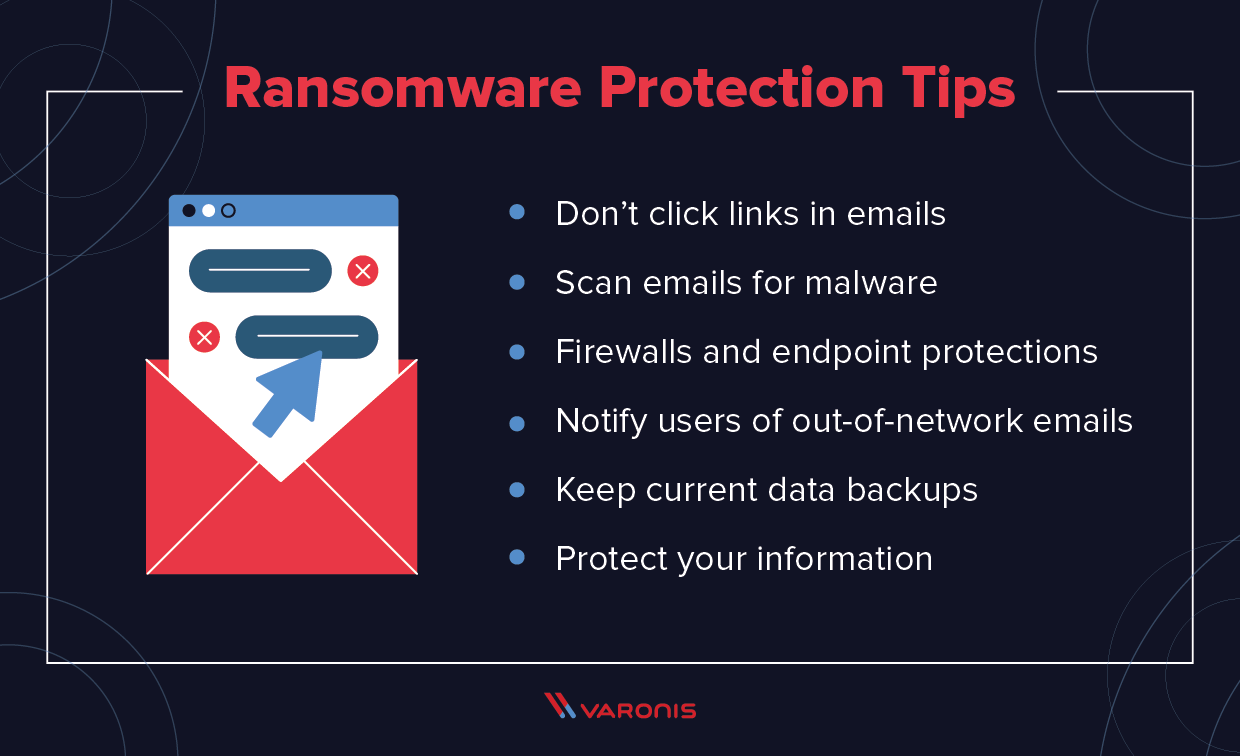
3. Use Firewalls and Endpoint Protection. Firewalls can be a good solution as you figure out how to stop ransomware attacks. Firewalls scan the traffic coming from both sides, examining it for malware and other threats.
Are Ransomware Attackers Ever Caught?
In late 2021, a Ukrainian attack
Can ransomware be prevented
Effective ransomware prevention requires a combination of good monitoring applications, frequent file backups, anti-malware software, and user training. Although no cyber-defenses reduce risk completely, you can greatly limit the chance attackers will be successful.
Cached
Can you stop a ransomware attack
Strong, Reputable Endpoint Anti-Virus Security
One of the most important ways to stop ransomware is to have a very strong endpoint security solution. These solutions are installed on your endpoint devices, and block any malware from infecting your systems.
Cached
How can we stop ransomware
Protection against ransomware – how to prevent an infectionNever click on unsafe links: Avoid clicking on links in spam messages or on unknown websites.Avoid disclosing personal information: If you receive a call, text message, or email from an untrusted source requesting personal information, do not reply.
Cached
Why can’t ransomware be stopped
Today's ransomware and malware are sophisticated, using random extensions and file names, which makes detection by signature-based (blocked list) solutions ineffective. Cloud Secure uses advanced machine learning algorithms to uncover unusual data activity and detect a potential attack.
Cached
What is the best defense against ransomware
TipsIdentify assets that are searchable via online tools and take steps to reduce that exposure.Protecting Against Ransomware.Understanding Patches and Software Updates.Using Caution with Email Attachments.SMB Security Best Practices.Website Security.Rising Ransomware Threat to Operational Technology Assets.
Does ransomware steal data or just lock it
Ransomware has been one of the most popular and successful malware types these days. With it, cybercriminals can successfully block access to your own data and devices, steal sensitive information, and earn a fortune by forcing you to pay a ransom.
Can you get around ransomware
The data that has been encrypted up to this point remains encrypted, but the ransomware virus can be stopped. Early detection means that the malware can be prevented from spreading to other devices and files. If you back up your data externally or in cloud storage, you will be able to recover your encrypted data.
Is ransomware easy to get rid of
Once ransomware has infected a system, it can be difficult — if not impossible — to remove. However, ransomware is often detected only after it is announced by an attacker, for example, via a pop-up on the screen.
Does wiping a computer remove ransomware
The surest way to confirm malware or ransomware has been removed from a system is by doing a complete wipe of all storage devices and reinstall everything from scratch. Formatting the hard disks in your system will ensure that no remnants of the malware remain.
Can a firewall block ransomware
3. Use Firewalls and Endpoint Protection. Firewalls can be a good solution as you figure out how to stop ransomware attacks. Firewalls scan the traffic coming from both sides, examining it for malware and other threats.
Are ransomware attackers ever caught
In late 2021, a Ukrainian attacker suspected to be part of the notorious Russia-based REvil ransomware gang was arrested and charged by the United States, and over $6 million in ransom money was recovered from an associate in the same group.
What is the #1 cause of ransomware
Infection Vectors
The majority of ransomware is propagated through user-initiated actions such as clicking on a malicious link in a spam e-mail or visiting a malicious or compromised website.
How long does ransomware last
Ransomware recovery typically takes a few days to a week, depending on the size and complexity of your company's IT infrastructure. However, if you have a good backup and recovery plan in place, you can minimize the downtime and get your business back up and running as quickly as possible.
What action to take if PC is infected with ransomware
Safely wipe the hard drive and reinstall your OS.
With your items safely backed up, wiping your hard drive—while often a last resort—could be the best option when it comes to removing malware. You can reinstall your operating system and then move files from an external hard drive or the cloud back onto your device.
Can ransomware spread through WiFi
In most cases, ransomware is spread through phishing emails containing malicious attachments, portable computers, exposure to public WiFi, Zero-Day vulnerabilities, and drive-by downloading.
What percentage of ransomware attacks are successful
Ransomware was the most common attack type for the manufacturing industry in 2021. 90% of ransomware attacks fail or result in zero losses for the victim.
How do most ransomware attacks start
Ransomware starts with cybercriminals entering a system and encrypting all data, then offering a decryption key if the victim agrees to pay a ransom through cryptocurrency.
Where do most ransomware attacks come from
In a phishing attack, a cybercriminal sends malware or malicious links in the message that, when clicked on, installs the ransomware program on the computer. And most people click these links as phishing emails pose as trusted contacts and companies.
Does ransomware go away if you pay
While paying the ransom almost always gets you some data back, the percentage of data restored after paying has dropped.
Can resetting PC remove ransomware
If a ransomware attack only targeted certain file types, such as Office files, a reset would eradicate those infected files and your machine would recover in a clean state.
Can ransomware spread over VPN
Many believe a Virtual Private Network (VPN) significantly protects against ransomware attacks. Not only is this myth incorrect, but your VPN is actually a potential attack vector for malicious actors.
How long do ransomware attacks last
IBM research from 2022 found: The average cost of a ransomware attack was $4.54 million. The average time to identify and contain an attack was 326 days. 50% of small businesses impacted by a ransomware attack were unprofitable within a month.
Why you shouldn t pay ransomware
Paying the first ransom may not solve the issue. If a business decides to comply with the ransom request, the hacker will likely request more money. Even if the hacker provides the encryption keys immediately, it could take the organization weeks or months to restore its encrypted information.
Can ransomware survive a factory reset
If you've had a malware attack on your device, you may want to consider performing a factory reset. This hard reset will wipe out the device data. When that happens, the dangerous viruses get deleted. A hard reset will also clear out unnecessary clutter on your phone.
How long does it take to get rid of ransomware
Ransomware recovery typically takes a few days to a week, depending on the size and complexity of your company's IT infrastructure. However, if you have a good backup and recovery plan in place, you can minimize the downtime and get your business back up and running as quickly as possible.


0 Comments