
What are the 7 types of credit?
Types of Credit
There are several types of credit that people can use to borrow money or make purchases. Here are some key points about the most common types of credit:
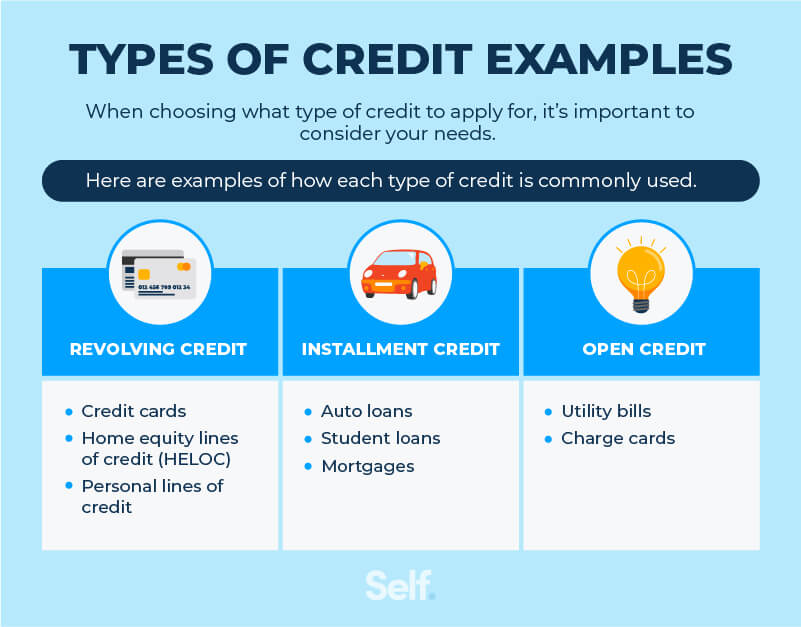
1. Revolving Credit: This type of credit allows you to borrow money up to a certain limit and repay it over time. Examples include credit cards and lines of credit.
2. Charge Cards: Charge cards are often confused with revolving credit cards. However, they require you to pay off the balance in full each month, unlike traditional credit cards.
3. Installment Credit: Installment credit involves borrowing a fixed amount of money and repaying it in equal monthly installments over a set period of time. Examples include car loans and mortgages.
4. Non-Installment or Service Credit: This type of credit is typically used for services rather than goods. Examples include utility bills and cell phone contracts.
5. Reward Credit Cards: These credit cards offer rewards and incentives for using them to make purchases, such as cash back or travel points.
6. Travel Credit Cards: Travel credit cards are designed for frequent travelers and offer rewards related to travel, such as airline miles or hotel points.
7. Cash-Back Credit Cards: Cash-back credit cards give you a percentage of your purchases back in cash as a reward.
8. Balance Transfer Credit Cards: Balance transfer credit cards allow you to transfer balances from one card to another, often with a low or zero introductory interest rate.
9. Zero APR or Low-Interest Credit Cards: These credit cards offer a low or zero annual percentage rate for a certain period of time, making them ideal for financing purchases or consolidating debt.
10. Credit-Builder or Student Credit Cards: These credit cards are designed for individuals with limited or no credit history, helping them establish credit by making responsible payments.
11. Co-Branded Credit Cards: Co-branded credit cards are issued in partnership with a specific brand or company and offer rewards or discounts related to that brand.
12. The 5 Cs of Credit: Lenders evaluate loan applications based on the 5 Cs of Credit: Capacity, Capital, Collateral, Conditions, and Character.
13. The 3 Cs of Credit: Students study the 3 Cs of Credit, which are Capacity, Character, and Collateral, to assess the riskiness of lending to individuals and make loan decisions.
14. The Most Common Credit Type: Revolving credit, which includes credit cards and lines of credit, is the most commonly used type of credit.
15. Different Types of Credit: In addition to the above types, other types of credit include trade credit, consumer credit, bank credit, open credit, installment credit, mutual credit, and service credit.
What are the 4 most common types of credit
Four Common Forms of CreditRevolving Credit. This form of credit allows you to borrow money up to a certain amount.Charge Cards. This form of credit is often mistaken to be the same as a revolving credit card.Installment Credit.Non-Installment or Service Credit.
Cached
What are the 3 most common types of credit
There are three types of credit accounts: revolving, installment and open. One of the most common types of credit accounts, revolving credit is a line of credit that you can borrow from freely but that has a cap, known as a credit limit, on how much can be used at any given time.
Cached
What are the main types of credit
What are the Types of Credit The three main types of credit are revolving credit, installment, and open credit. Credit enables people to purchase goods or services using borrowed money. The lender expects to receive the payment back with extra money (called interest) after a certain amount of time.
Cached
What are the 7 credit card categories
Reward Credit Cards. Rewards credit cards do just what you'd think: They give you incentives for using the card to make your purchases.Travel Credit Cards.Cash-Back Credit Cards.Balance Transfer Credit Cards.Zero APR or Low-Interest Credit Cards.Credit-Builder or Student Credit Cards.Co-Branded Credit Cards.
Cached
What are the 5 Cs of credit
Lenders score your loan application by these 5 Cs—Capacity, Capital, Collateral, Conditions and Character. Learn what they are so you can improve your eligibility when you present yourself to lenders.
What are the 3 Cs of credit
Students classify those characteristics based on the three C's of credit (capacity, character, and collateral), assess the riskiness of lending to that individual based on these characteristics, and then decide whether or not to approve or deny the loan request.
What are the 3 C’s of credit
Students classify those characteristics based on the three C's of credit (capacity, character, and collateral), assess the riskiness of lending to that individual based on these characteristics, and then decide whether or not to approve or deny the loan request.
What are the 4 C’s of credit
The 4 Cs of Credit helps in making the evaluation of credit risk systematic. They provide a framework within which the information could be gathered, segregated and analyzed. It binds the information collected into 4 broad categories namely Character; Capacity; Capital and Conditions.
What is the most common credit type
The two most widely used types of credit scores are FICO Score and VantageScore.
What is the most common form of credit
Revolving credit, also known as open-end credit, is the most common form of credit. With revolving credit, you receive a line of credit with a preset limit you repeatedly borrow from and repay. As you repay what you owe, you can continue to borrow from the line of credit.
What are the 8 types of credit
Trade Credit, Consumer Credit, Bank Credit, Revolving Credit, Open Credit, Installment Credit, Mutual Credit, and Service Credit are the types of Credit.
What are the 5 levels of credit
Credit scores typically range from 300 to 850. Within that range, scores can usually be placed into one of five categories: poor, fair, good, very good and excellent.
What is the highest possible credit score
The base FICO® Scores range from 300 to 850, and a good credit score is between 670 and 739 within that range.
What are the six major Cs of credit
Lenders customarily analyze the credit worthiness of the borrower by using the Five C's: capacity, capital, collateral, conditions, and character. Each of these criteria helps the lender to determine the overall risk of the loan.
What is the 20 10 Rule of credit
The 20/10 rule of thumb is a budgeting technique that can be an effective way to keep your debt under control. It says your total debt shouldn't equal more than 20% of your annual income, and that your monthly debt payments shouldn't be more than 10% of your monthly income.
What are the 4cs of credit
Standards may differ from lender to lender, but there are four core components — the four C's — that lender will evaluate in determining whether they will make a loan: capacity, capital, collateral and credit.
Can you get a credit score of 900
A 900 credit score may be the highest on some scoring models, but this number isn't always possible. Only 1% of the population can achieve a credit score of 850, so there's a certain point where trying to get the highest possible credit score isn't realistic at all.
What are the 5 components of credit score
FICO Scores are calculated using many different pieces of credit data in your credit report. This data is grouped into five categories: payment history (35%), amounts owed (30%), length of credit history (15%), new credit (10%) and credit mix (10%).
What is 43 debt-to-income ratio
The debt-to-income (DTI) ratio measures the amount of income a person or organization generates in order to service a debt. A DTI of 43% is typically the highest ratio a borrower can have and still get qualified for a mortgage, but lenders generally seek ratios of no more than 36%.
Which credit score is the hardest
Here are FICO's basic credit score ranges:Exceptional Credit: 800 to 850.Very Good Credit: 740 to 799.Good Credit: 670 to 739.Fair Credit: 580 to 669.Poor Credit: Under 580.
What is the strongest credit quality
A triple-A (AAA) is the highest credit quality, and C or D (depending on the agency issuing the rating) is the lowest or junk quality.
What type of credit should I have
Ideally, you should have all three different types of credit. In terms of your FICO score, having a mix of revolving credit, installment credit, and open credit could help, especially if you are trying to build your credit.
What is the best source of credit
Here are your best options:Personal loan from a bank or credit union. Banks or credit unions typically offer the lowest annual percentage rates, or total cost of borrowing, for personal loans.0% APR credit card.Buy now, pay later.401(k) loan.Personal line of credit.
Does anyone ever reach 850 credit score
While achieving a perfect 850 credit score is rare, it's not impossible. About 1.3% of consumers have one, according to Experian's latest data. FICO scores can range anywhere from 300 to 850. The average score was 714, as of 2021.
Can anyone have a 900 credit score
A 900 credit score may be the highest on some scoring models, but this number isn't always possible. Only 1% of the population can achieve a credit score of 850, so there's a certain point where trying to get the highest possible credit score isn't realistic at all.


0 Comments