
Should you split tunnel VPN?
Should you split tunnel VPN?
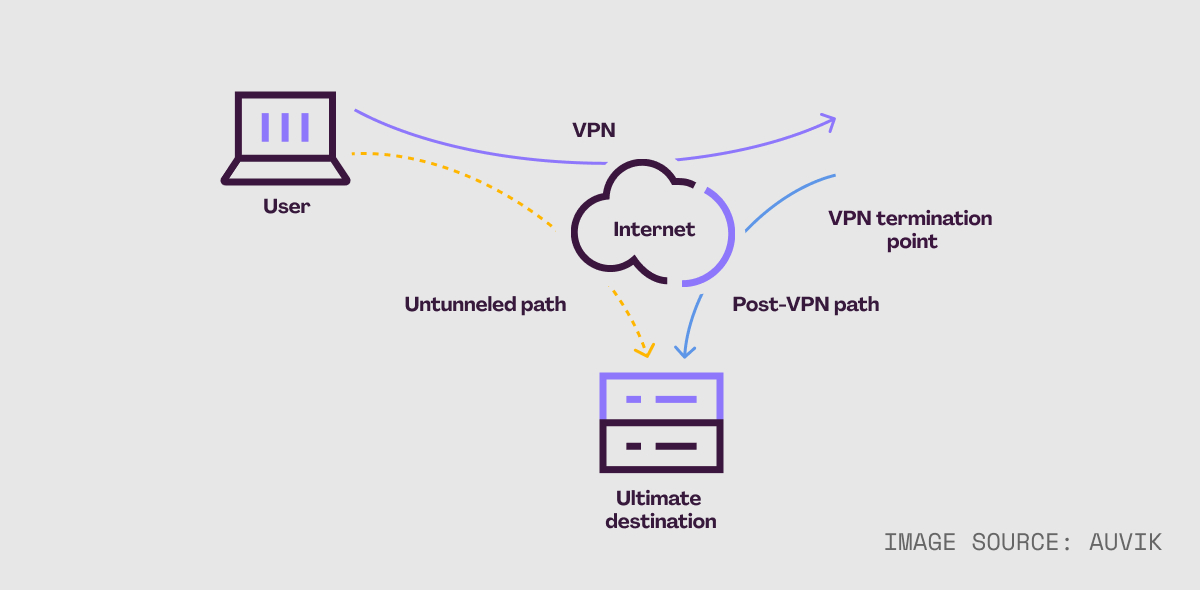
What is the advantage of split tunneling?
Advantages. One advantage of using split tunneling is that it alleviates bottlenecks and conserves bandwidth as Internet traffic does not have to pass through the VPN server. Another advantage is in the case where a user works at a supplier or partner site and needs access to network resources on both networks.
Is split tunneling faster?
Split-tunnel VPNs are more flexible, letting you browse faster or access services from multiple locations at the same time, but they’re not as secure as full tunnel VPNs.
What is the difference between a tunnel mode VPN and a split tunneling VPN?
A full tunnel connection is really just another word for a standard VPN. This means all of your traffic will travel across the private network and be encrypted. Split tunneling, as defined above, routes only a portion of that traffic, which it encrypts, through the VPN’s private network.
What is the downside of split tunneling?
Split tunneling introduces some security challenges. Any data that does not traverse a secure VPN is not protected by the corporate firewall, endpoint detection and response system, antimalware, and other security mechanisms, so it may be accessible and/or intercepted by ISPs and malicious hackers.
What is the problem with split tunneling VPN?
Needless to say, there are a few risks of using VPN split tunneling, such as bypassing security measures, including proxy servers designed to keep your traffic secure. If it isn’t set up correctly or is not secure, it can leave room for hackers to access your information, which will also not be hidden from your ISP.
What are the disadvantages of tunneling in networking?
One of the main disadvantages of IP tunneling is that it can increase the overhead and complexity of your network. Overhead is the extra data or processing that is required to support the tunneling mechanism, such as the encapsulator header, the encryption algorithm, or the tunnel endpoint configuration.
What is the best VPN tunnel protocol?
OpenVPN is a highly recommended VPN protocol in terms of security. It uses 256-bit encryption as a default but also offers other ciphers such as 3DES, Blowfish, CAST-128, and AES.
What is split tunneling and why would we use it?
Split tunneling is the process of allowing a remote user or device to establish a non-remote connection with a system and simultaneously communicate via some other connection to a resource in an external network. This method of network access enables a user to access remote devices and simultaneously access uncontrolled networks.
What are the risks of tunneling?
Some of the most common tunneling hazards include tunnel stability, changing ground conditions, limited space and access, air contamination or oxygen depletion, and fire or explosion.
What is the least secure VPN protocol?
PPTP (Point-to-Point Tunneling Protocol) is the oldest and least secure VPN protocol when compared to others like WireGuard or OpenVPN. It was created back in 1999 for dial-up purposes.
What is the advantage of split tunneling
Advantages. One advantage of using split tunneling is that it alleviates bottlenecks and conserves bandwidth as Internet traffic does not have to pass through the VPN server. Another advantage is in the case where a user works at a supplier or partner site and needs access to network resources on both networks.
CachedSimilar
Is split tunneling faster
Split-tunnel VPNs are more flexible, letting you browse faster or access services from multiple locations at the same time, but they're not as secure as full tunnel VPNs.
Cached
What is the difference between a tunnel mode VPN and a split tunneling VPN
A full tunnel connection is really just another word for a standard VPN. This means all of your traffic will travel across the private network, and be encrypted. Split tunneling, as defined above, routes only a portion of that traffic, which it encrypts, through the VPN's private network.
Cached
What is the downside of split tunneling
Split tunneling introduces some security challenges. Any data that does not traverse a secure VPN is not protected by the corporate firewall, endpoint detection and response system, antimalware and other security mechanisms, so it may be accessible and/or intercepted by ISPs and malicious hackers.
What is the problem with split tunneling VPN
Needless to say, there are a few risks of using VPN split tunneling, such as: Bypassing security measures, including proxy servers designed to keep your traffic secure. If it isn't set up correctly or is not secure, it can leave room for hackers to access your information, which will also not be hidden from your ISP.
What are the disadvantages of tunneling in networking
One of the main disadvantages of IP tunneling is that it can increase the overhead and complexity of your network. Overhead is the extra data or processing that is required to support the tunneling mechanism, such as the encapsulator header, the encryption algorithm, or the tunnel endpoint configuration.
What is the best VPN tunnel protocol
OpenVPN
What is the most secure VPN protocol Many VPN experts recommend OpenVPN as the most secure protocol. It uses 256-bit encryption as a default but also offers other ciphers such as 3DES (triple data encryption standard), Blowfish, CAST-128, and AES (Advanced Encryption Standard).
What is split tunneling and why would we use it
The process of allowing a remote user or device to establish a non-remote connection with a system and simultaneously communicate via some other connection to a resource in an external network. This method of network access enables a user to access remote devices, and simultaneously, access uncontrolled networks.
What are the risks of Tunnelling
Some of the most common tunnelling hazards are:tunnel stability, including rock or earth falls and rock bursts.changing ground conditions, including strata and stress fluctuations.limited space and access, including confined spaces.air contamination or oxygen depletion.fire or explosion.
What is the least secure VPN protocol
PPTP
The oldest of all the VPN protocols is the PPTP, or point-to-point tunneling protocol. PPTP is also the least secure when compared to the other protocols for VPNs, like WireGuard or OpenVPN. PPTP was created back in 1999 for dial-up purposes.
Which tunneling protocol is more secure and why
OpenVPN. OpenVPN is an open-source enhancement of the SSL/TLS framework with additional cryptographic algorithms to make your encrypted tunnel even safer. It's the go-to tunneling protocol for its high security and efficiency.
What precautions should be taken when tunneling
GENERAL SAFETY PRECAUTIONS IN TUNNELING:
Adequate ventilation is required to remove polluted air, gases and smoke produced. be ensured. 4. The tests shall be carried out once after every blast or a major rock-fall or at least every 24 hours once.
What are the disadvantages of tunnel form
Disadvantages of tunnel FWS
A continuous and fast cash flow that complies with the speed of production is essential. Due to high production speed management-related functions are vital. Coordination problems cause remarkable delays in schedule. Skilled labor force is needed compared to traditional systems.
What is the most secure tunneling protocol
OpenVPN
What is the most secure VPN protocol Many VPN experts recommend OpenVPN as the most secure protocol. It uses 256-bit encryption as a default but also offers other ciphers such as 3DES (triple data encryption standard), Blowfish, CAST-128, and AES (Advanced Encryption Standard).
What VPN does not protect you from
A VPN helps you stay invisible and behind the scenes, but it doesn't give you immunity against online risks like malware, ransomware, phishing attacks, or even computer viruses. That's where your antivirus software comes in.
What are three obstacles in tunneling
The difficulties during tunnelling posed by the geological features like thrust zones, shear zones, folded rock sequence, in-situ stresses, rock cover, ingress of water, geothermal gradient, ingress of gases, high level of seismicity etc. have been experienced on different project sites in Himalayan region.
What are the risks in tunnels
Some of the most common tunnelling hazards are: tunnel stability, including rock or earth falls and rock bursts. changing ground conditions, including strata and stress fluctuations. limited space and access, including confined spaces.
Which is the best shape of tunnel to be used
A circular tunnel is generally best suited for resisting both internal and external forces regardless of the purpose for which the tunnel is used. Theoretically, a circular section provides the largest cross-sectional area for the smallest diameter, which provides greater resistance to external pressure.
Why you shouldn’t use VPN all the time
Why shouldn't I use a VPN A VPN might reduce your connection speed even if your internet service provider isn't throttling your speed; Using a VPN on mobile will increase your mobile data usage; Using a VPN is considered an offense in some countries, and you can get fined or even be incarcerated for it.
Why VPN is not recommended
Why VPN is Not Secure. VPNs are insecure because they expose entire networks to threats like malware, DDoS attacks, and spoofing attacks. Once an attacker has breached the network through a compromised device, the entire network can be brought down.
What is the most common cause of tunnel failure
Tunnel collapse can happen for a number of reasons such as: inadequate ground investigation, shallow ground conditions, inadequate support measures, cost optimization, inexperienced contractors, inadequate supervision, delays of excavation and support erection.
What is tunnel advantages and disadvantages of tunneling
Advantages of Tunnels
for which it is constructed from weather effects such as snow, rain etc. Thus tunnels reduce the maintenance cost of the system. Tunnels avoid troubling to surface life and traffic during construction. Tunnels protect the system from destruction due to bombarding during wartime.
What are the disadvantages of using tunneling
One of the main disadvantages of IP tunneling is that it can increase the overhead and complexity of your network. Overhead is the extra data or processing that is required to support the tunneling mechanism, such as the encapsulator header, the encryption algorithm, or the tunnel endpoint configuration.
What are the advantages of rectangular tunnels
The main advantage of the square and rectangular tunnels compared to the circular ones is that they have a greater space utilization ratio.
Is it OK to use a VPN 24 7
If you seek privacy and security when connecting to the internet, be it on public Wi-Fi, at home, or at work, you can be sure that a VPN will keep this information safe and secure 24/7.


0 Comments